
Channel Islands Fire & the Importance of Faunistic Surveys
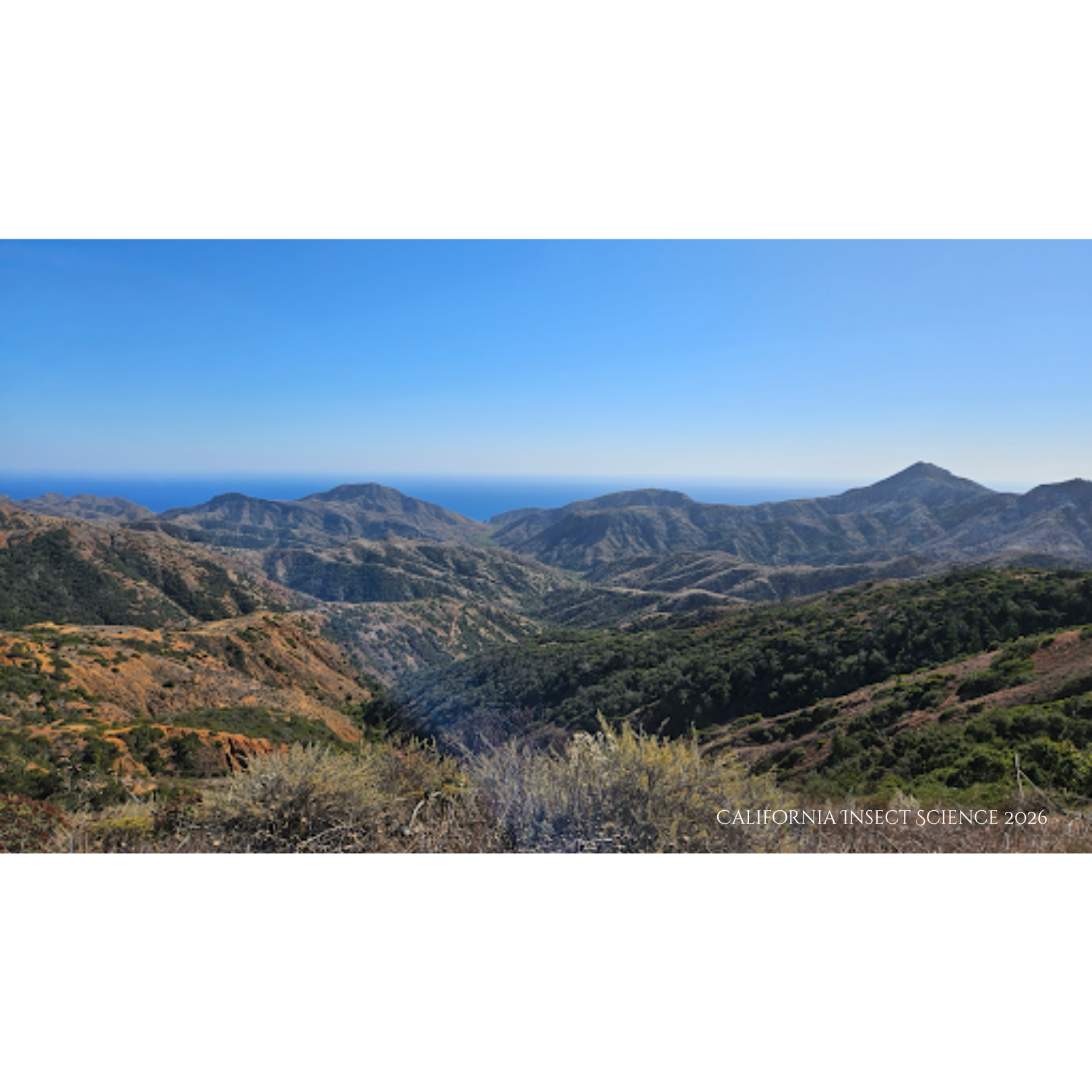
The view from South Ridge Rd. looking across the southern expanse of Santa Cruz Island.
At the time of this writing, the wildfire on Santa Rosa Island of the Channel Islands National Park off the southern coast of California is reported as nearly fully contained. The fire is tragic and hits close to home because I am one of the lucky few to have had rare access to another island in the park, Santa Cruz. I was invited to visit Santa Cruz Island, the largest in the chain, for research and exploration and have been saddened to see its neighbor, Santa Rosa, the second largest island, burning due to an accidental wildfire.
Several of California’s iconic ecosystems are fire adapted such as chaparral, redwood forests and oak woodlands. The Channel Islands, however, are not. Their burn cycles have been very rare throughout measurable history and the islands have unique plant and animal taxa that evolved without the frequent fires that are needed to reset ecosystems on the mainland. Some of these species are considered endemic - found nowhere else on Earth. And because they occur in small, isolated populations, raging wildfires can wipe them out of existence. Even if individuals of a species survive, the habitat that provides needed resources isn’t likely to recover in time to sustain a population.
What is troubling is that we don’t have a full catalog of the island’s flora and fauna. Therefore, we have likely lost species we didn’t even know existed.
Fascinating Fauna on Santa Cruz Island
But I don’t want to dwell on bad news. Instead, l want to share with you some of the island’s native and unique fauna. Did you know that pygmy mammoths once roamed the islands? It is a fascinating fact, and if you want to go down that rabbit hole, see the sources section below.
My work on Santa Cruz Island started in 2018 when I was asked to conduct a survey to help The Nature Conservancy (TNC) staff get a better grasp on the current status of the Opuntia cactus biological control program that began in the 1940s. I enlisted the help of my wife, also an entomologist, and we were hosted by John Knapp who was the senior TNC ecologist for Santa Cruz Island. John graciously showed us the ropes, shared an immense amount of island history and assisted with the studies. On our first trip to the island, we also took a student intern from Cal Poly to help with data collection. The findings from this trip will be fodder for a future blog and eventual Nature page on California Insect Science. After the first trip, we were stoked when asked if we’d like to continue on and do more surveys to help catalog the virtually unknown insect fauna on the island. It was a dream come true.
Santa Cruz Island is protected by two entities, the National Park Service (NPS) and The Nature Conservancy. TNC runs the majority of the island, which is the crown jewel in their global conservation efforts. Research is done by invitation only and there is no public access to that part of the island beyond the day-use beaches and designated national park boundary. Accommodations for overnight stays are rustic, but quaint. Invited researchers are provided a room in the bunkhouse of the old Stanton Ranch and there's a common mess hall for food storage and prep. You pack in all that you need.
There are no paved roads and travel on the island is by 4 wheel drive vehicles on unmaintained roads or by foot. If you need a vehicle, you must pass the NPS off road drivers training first. Once you’re assigned a vehicle, learn how to use the gas pump and hand-held radios, off you go.
And what a thrill it is. Winding your way across the island, not seeing another soul in this vast, remote, and glorious landscape. And after a long day of discovery and data collection, there’s nothing better than a hot meal and shower and kicking back looking up at the nighttime skies. It is intensely dark at night because there’s no light pollution. And if you’re there on a moonless night, the Milky Way is so clear, your gaze is drawn in and held for long, thought-filled moments. It is a magical place.
Our research trips were focused on surveys of plant galls and on the fly family Tephritidae. Our last trip was in 2024 and I am slowly working through all of our collected samples. But I can share with you some of our more exciting finds to date.
New Discoveries and New Species
We have discovered several new insect species that form galls on plants. For example, there is a plant species found on the island and the mainland, Pseudognaphalium californicum, also known as California everlasting, California cudweed or ladies’ tobacco. And on this plant we discovered a gall that is formed by an undescribed species of Cecidomyiidae gall midge in the genus Asphondylia. I will be publishing the species description with the help of Dr. Ray Gagné, the world’s leading authority on cecid gall midges.
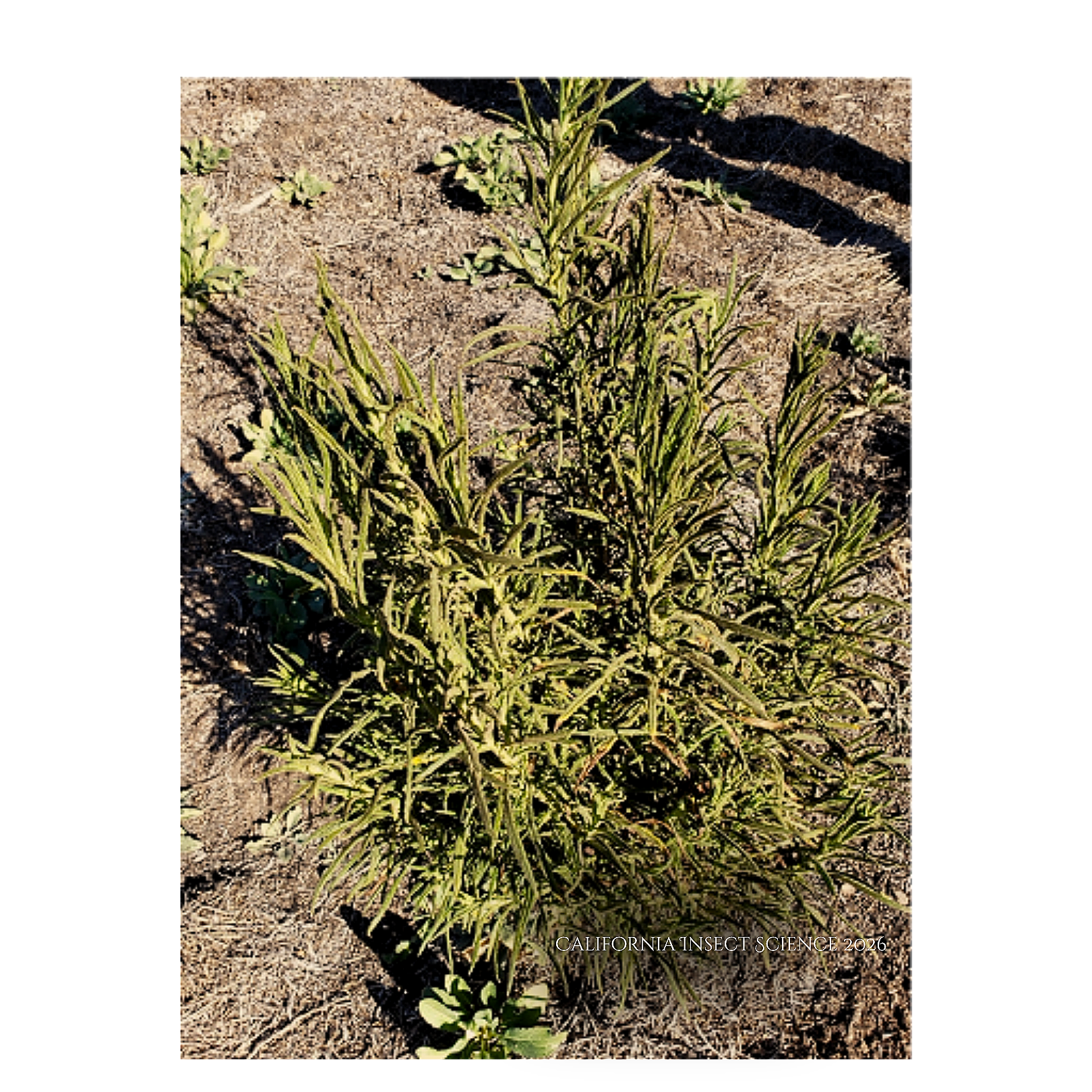
A typical Pseudognaphalium californicum plant, between 1 - 2 feet tall, in full sun. Each stem produces an elongated inflorescence with white flowers. The gall prevents the stem from fully developing.
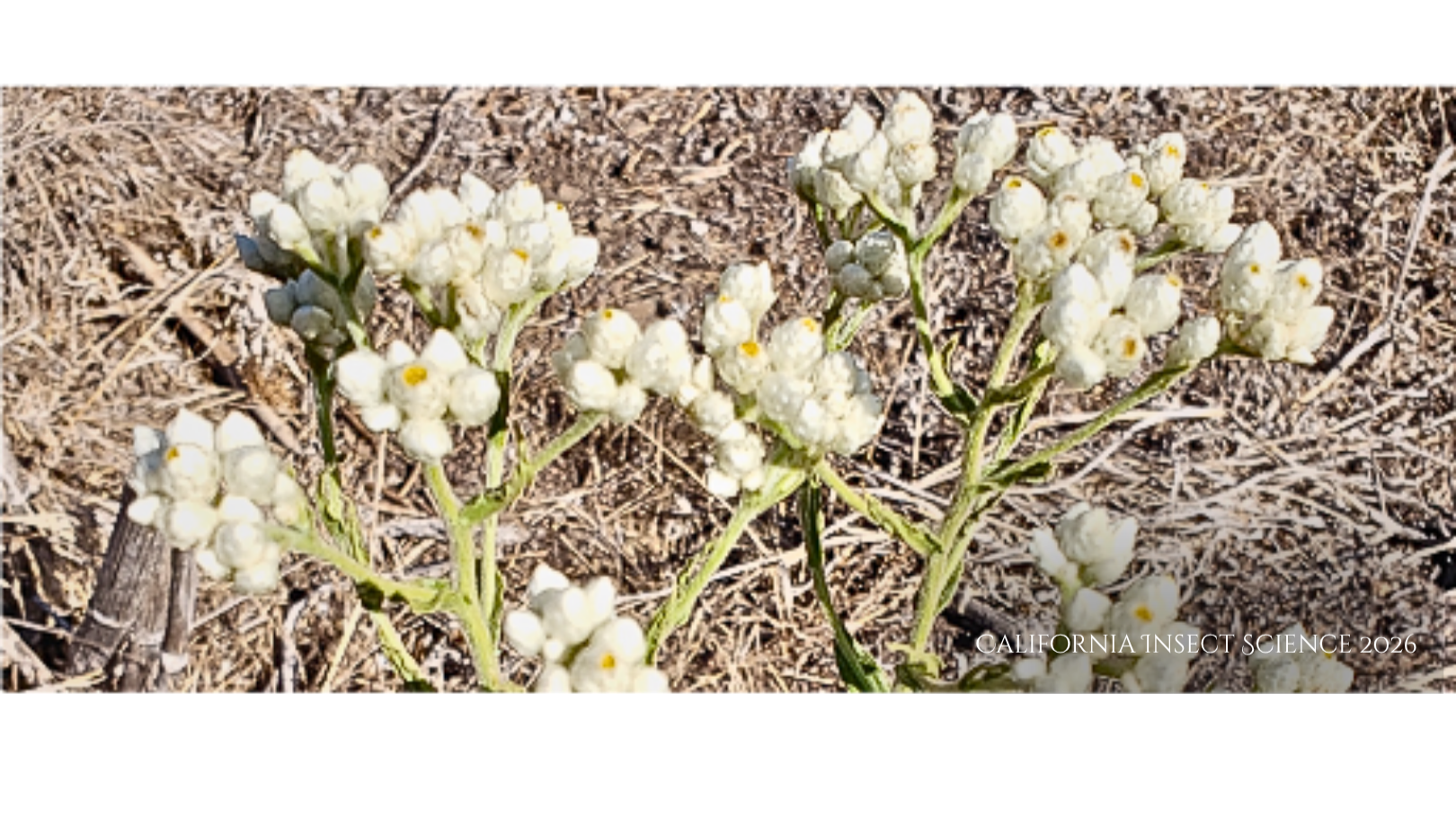
A close up of Pseudognaphalium californicum flowers. When you see the yellow center, the flower is in full bloom. The entire plant has a pleasing, butterscotch like odor.
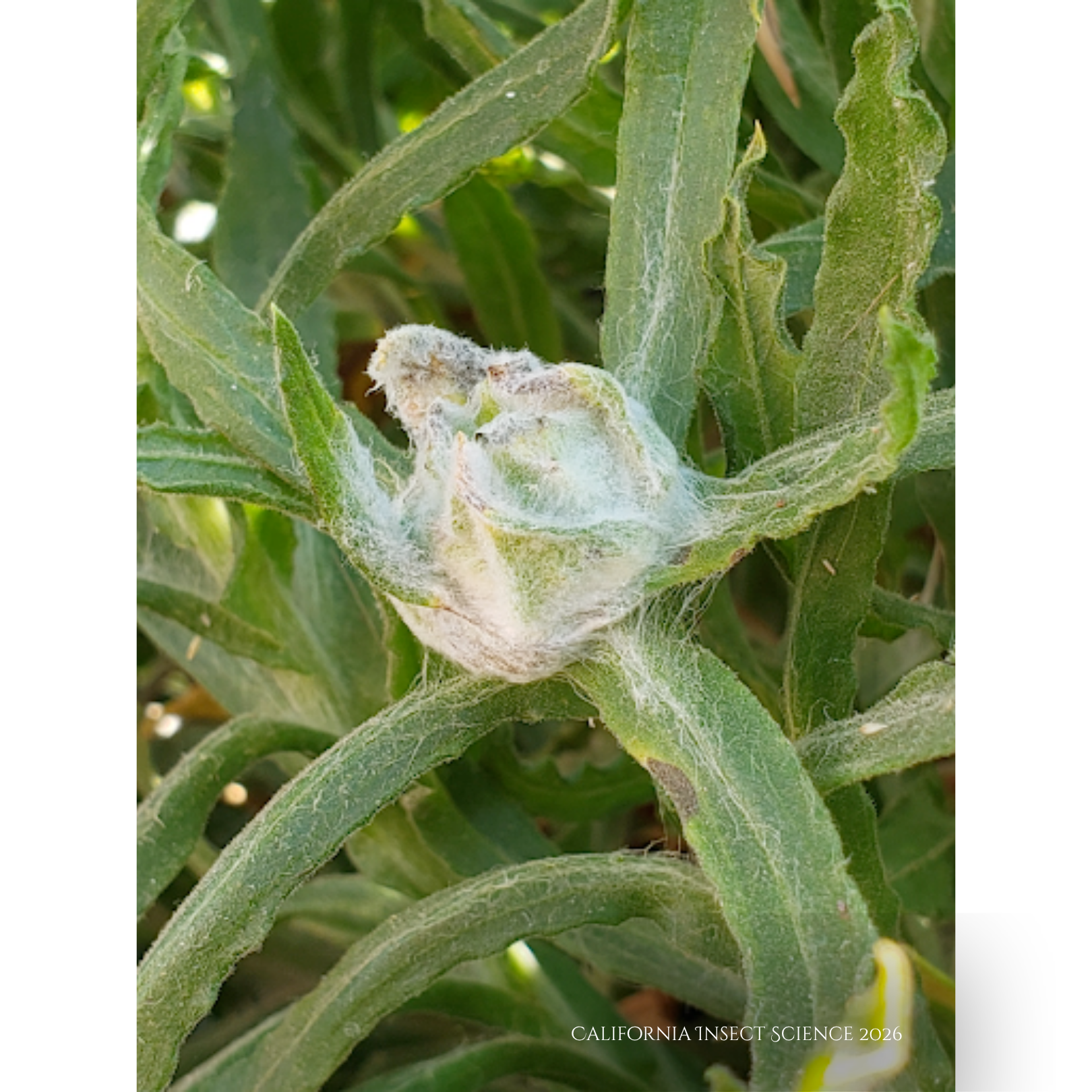
The newly discovered gall found at the base of Pseudognaphalium californicum. The gall midge female laid eggs on the developing shoot. The larvae hatched out and began feeding on the apical meristem tissues. This prevented the shoot from elongating and instead the plant growth enveloped the larvae in a new structure, the gall, in which they fed and grew to adulthood.
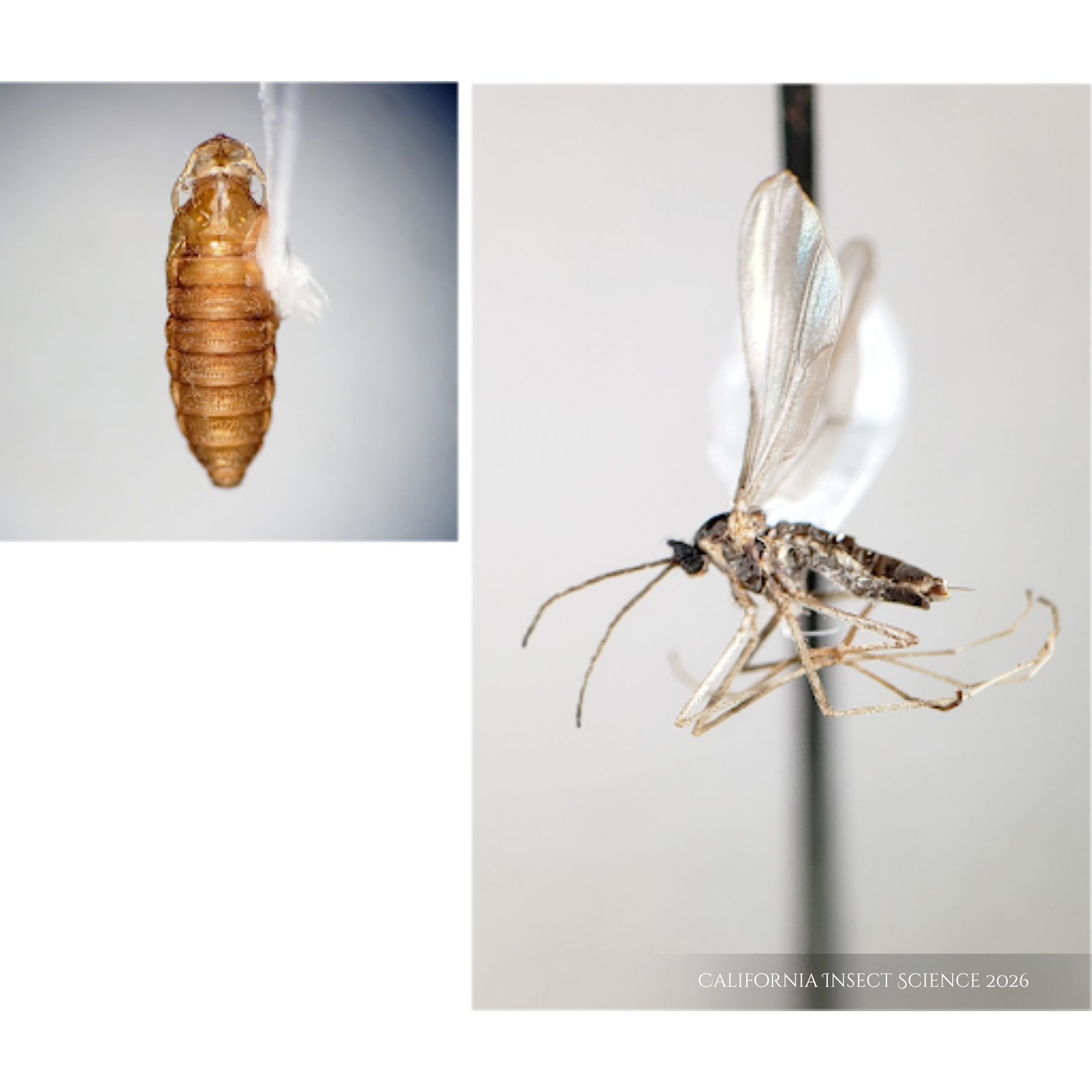
The new species of gall maker that emerged from Pseudognaphalium californicum. It is a fly in the family Cecidomyiidae and the genus Asphondylia. The brown object (left) is the pupa from which the adult (right) emerged.
Gall makers are known to be susceptible to attack by numerous species of hymenopterous parasitoids. These microscopic wasps have egg-laying tubes instead of stings. They are incredibly diverse and largely unstudied, that is why the chances of finding a new species is quite high.
Here is a colorful species from the family Torymidae that we found parasitizing our new species of gall midge on ladies’ tobacco (love that common name!).
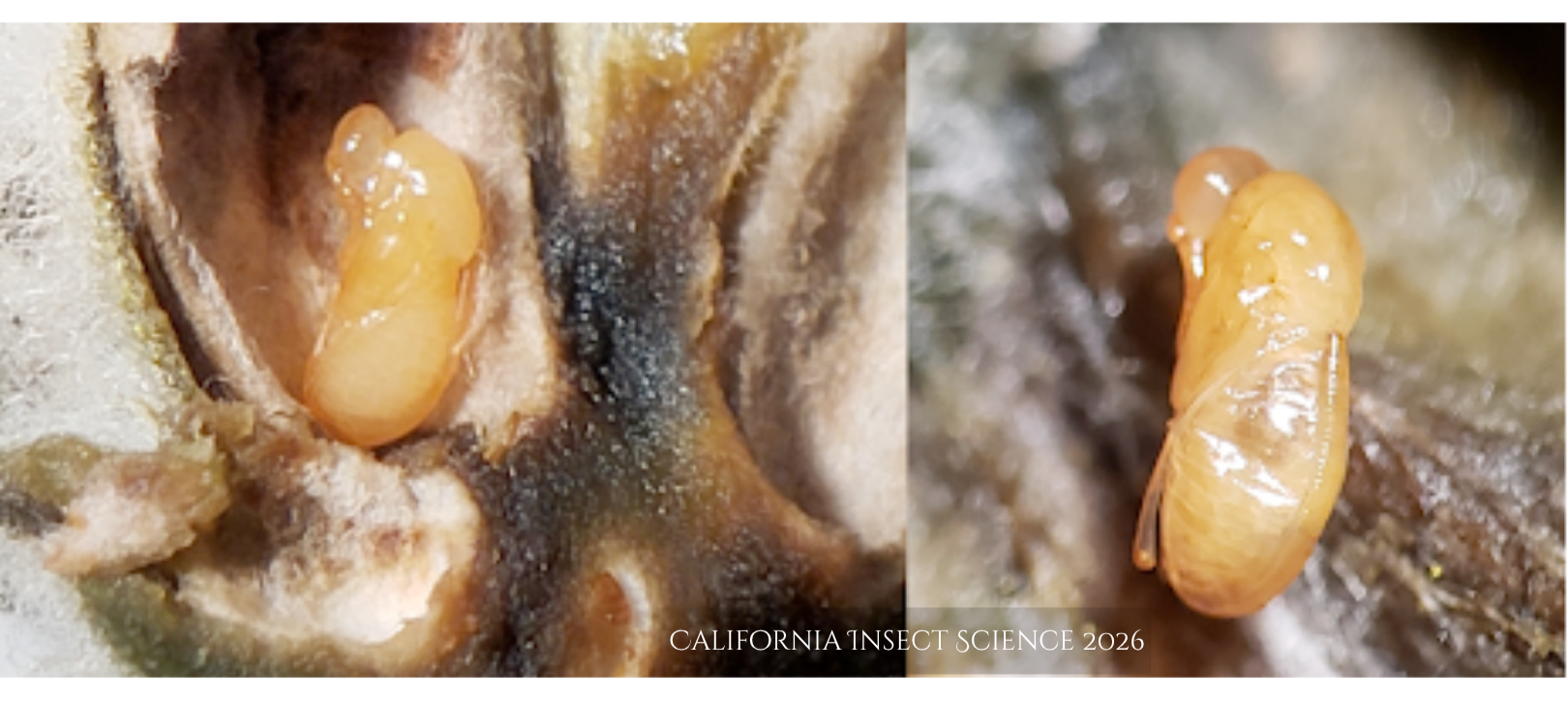
Pupal stage of the unnamed Torymidae inside the gall locule.
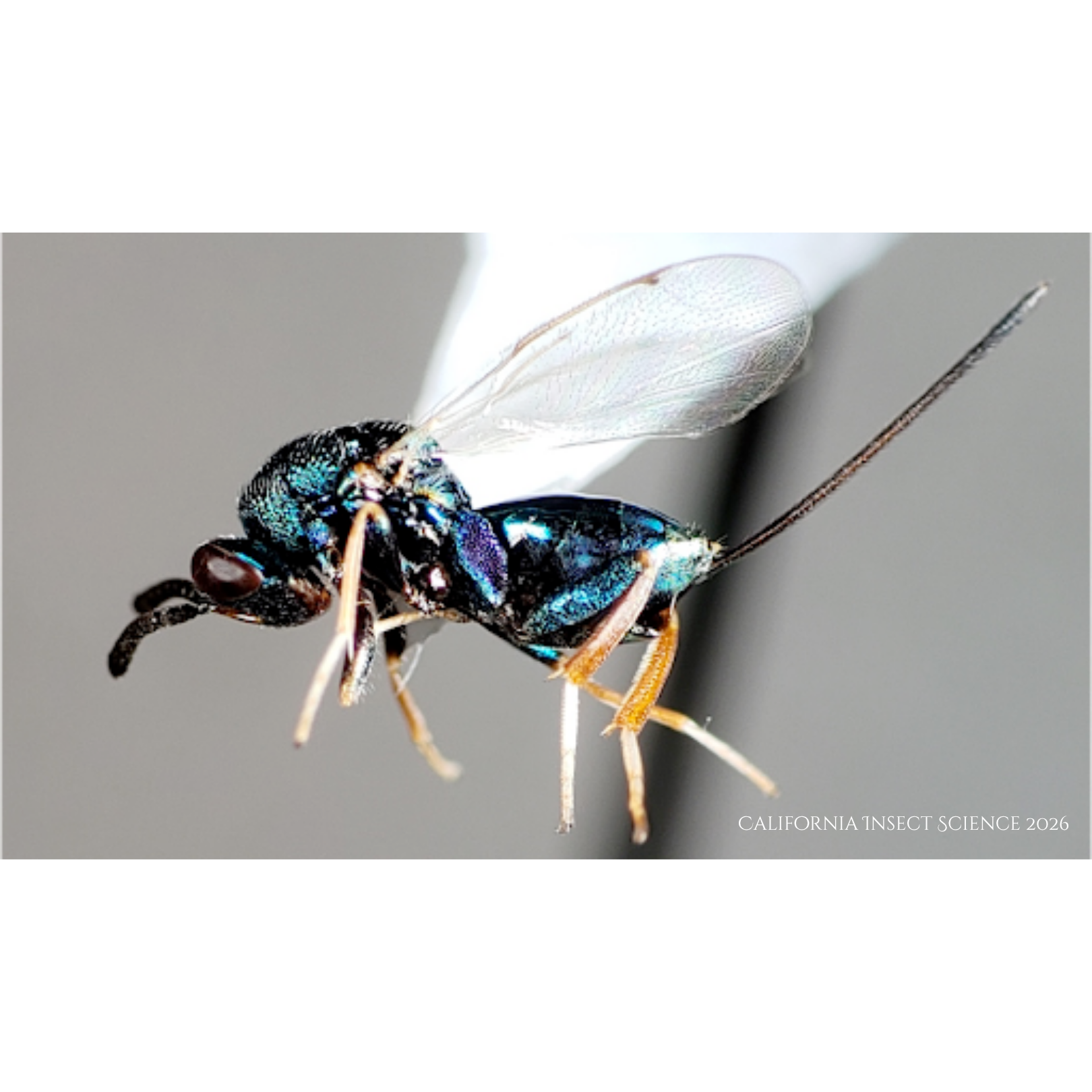
Unnamed Torymidae wasp on a paper point. Notice the metallic blue and purple coloration and long ovipositor. The ovipositor allows this wasp to drill into the thick gall and locate and parasitize a gall making larvae.
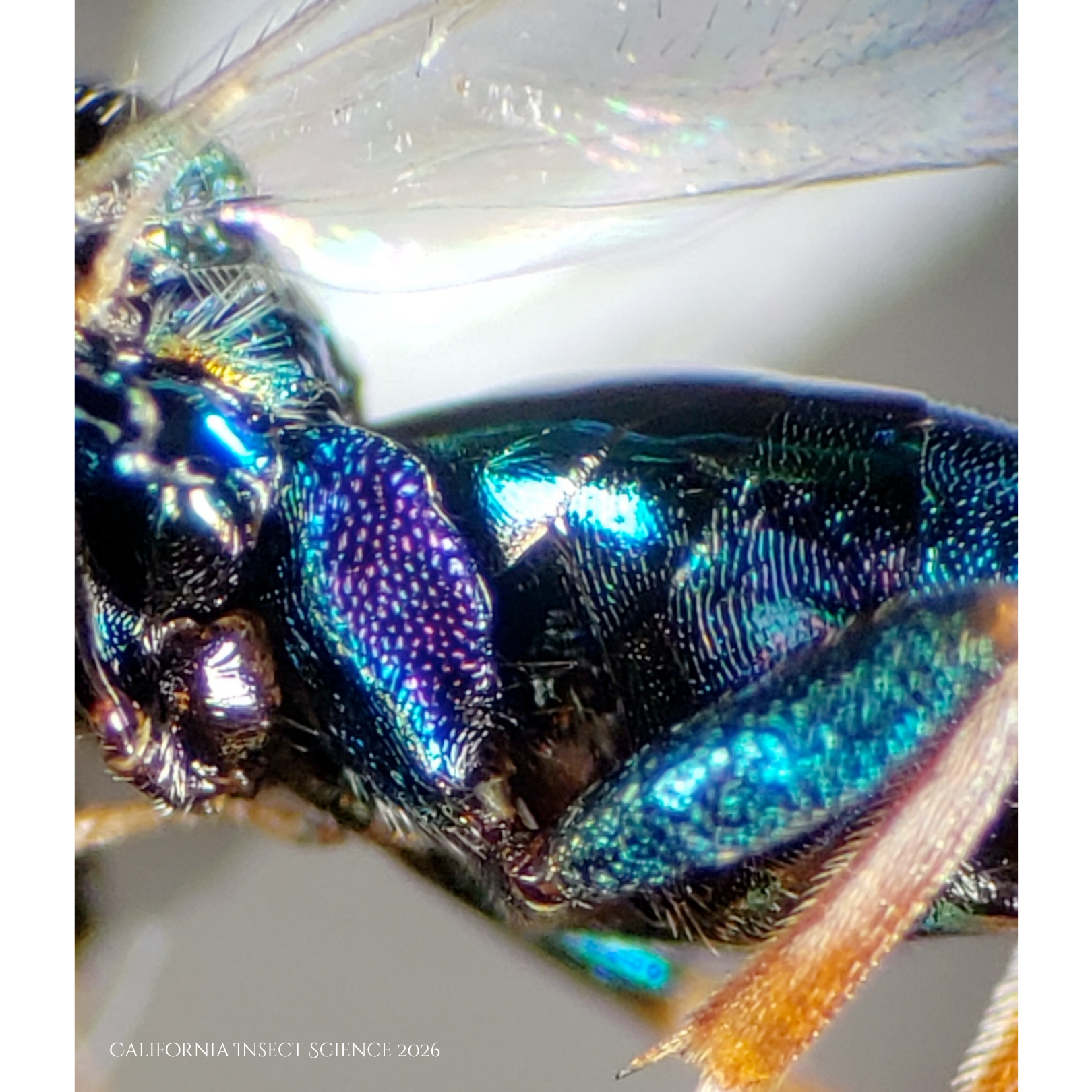
Close up of the purple coxa of the unnamed Torymidae. Purple is a very uncommon color in the insect world.
The island also helped us solve a long-standing gall mystery. California fuchsia, Epilobium canum, is quite common and there is a gall midge that forms its gall in the flowers. However, there had not been any confirmation of the identification of the midge, until the island finally shared the secret.
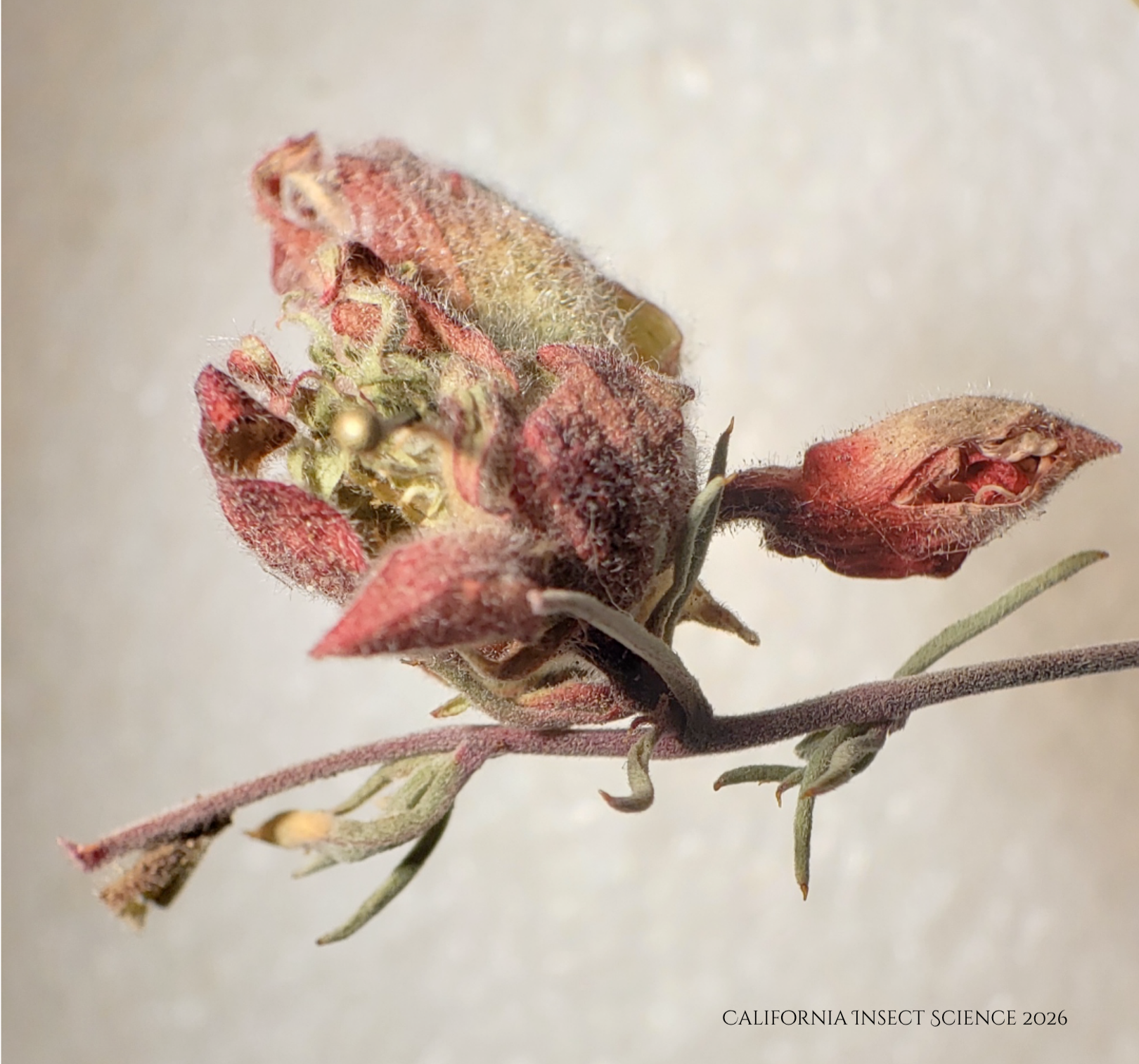
A distorted fuchsia flower containing galls created by the cecidomyiid gall midge pictured below.
And here is the mystery gall maker, Contarinia zauschneriae, Cecidomyiidae.
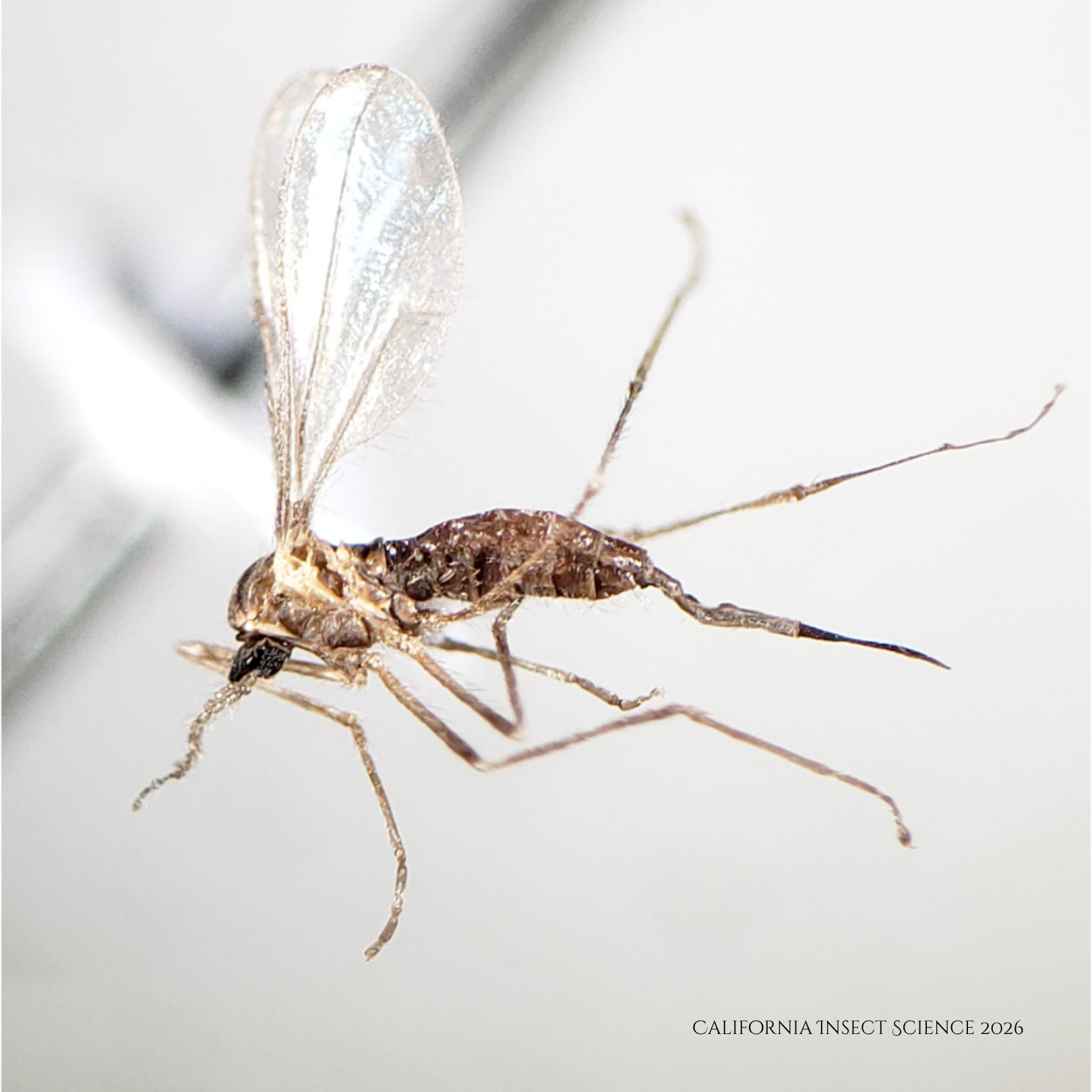
Gall maker, Contarinia zauschneriae, Cecidomyiidae.
Oak Galls
Galls on oaks are favorites of mine, and it was cool to see that many of the mainland gall making species were also present on Santa Cruz Island . Many oak galls are made by wasps in the family Cynipidae. It is okay to be confused. Cynipids are a family of parasitoid wasps and most member species have converted, over evolutionary time, to directly forming galls themselves rather than parasitizing gall makers. They cut out the middle man, errr middle wasp, and went full vegan. One common species is the California gall wasp, Andricus quercuscalifornicus, that forms the large “apple” galls commonly seen on different species of white oaks.
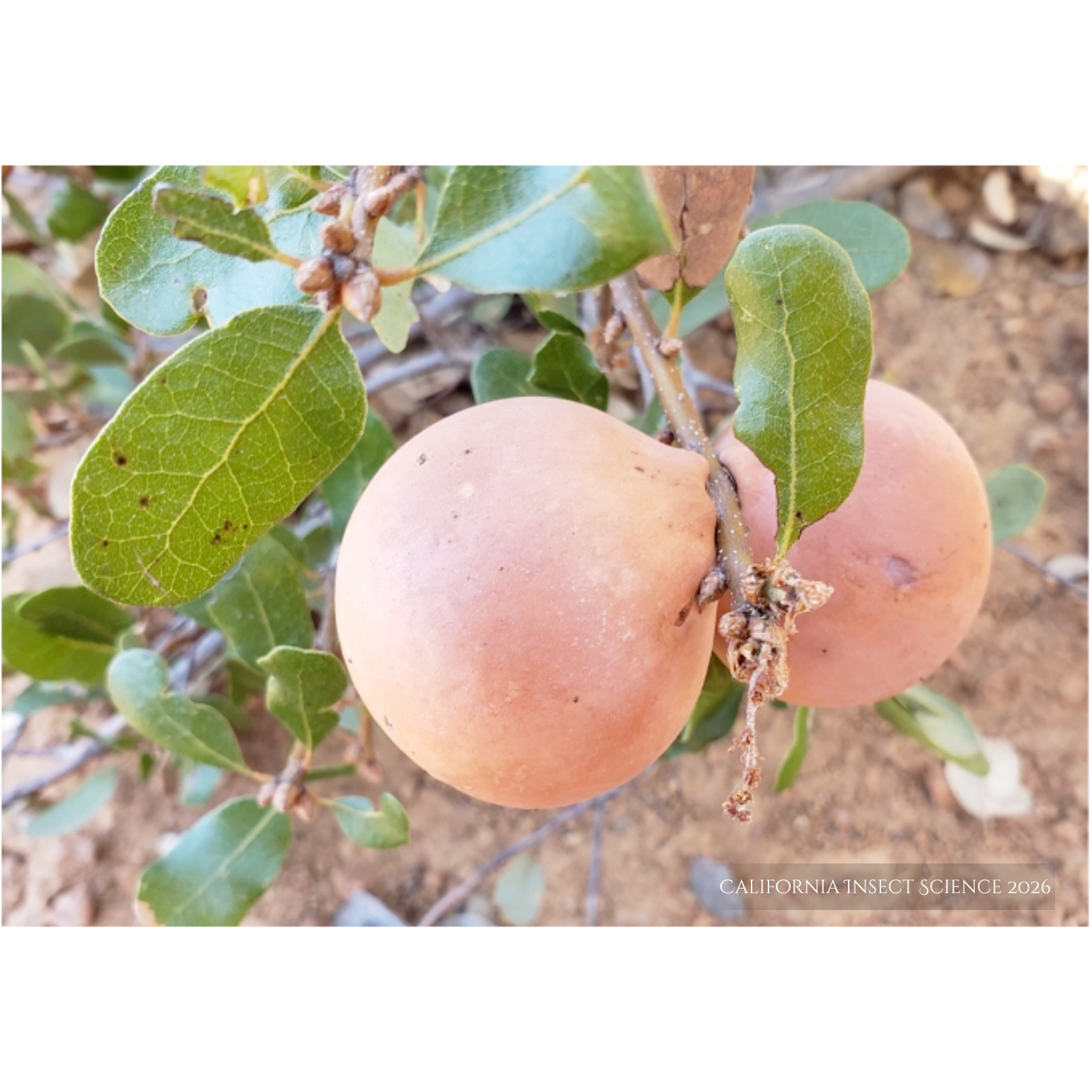
Two mature and dried apple galls formed by California gall wasp, Andricus quercuscalifornicus, often seen on species of white oaks,
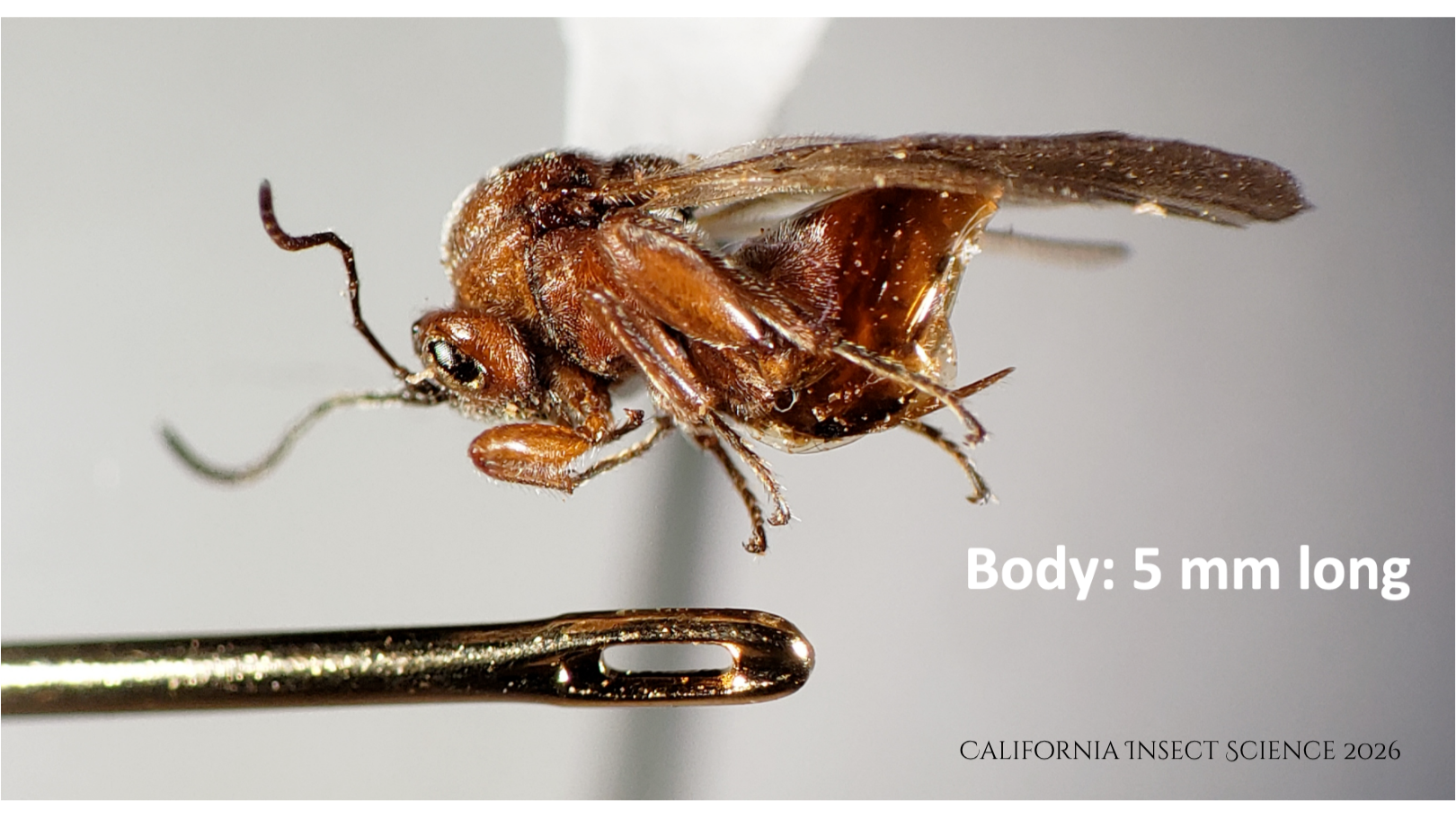
California gall wasp, Andricus quercuscalifornicus.
A peek inside a developing gall reveals the larva during its growth stage inside a locule where it feeds on the inner wall linings. The other moist tissues surrounding the locule and forming the bulk of the gall are never fed upon.
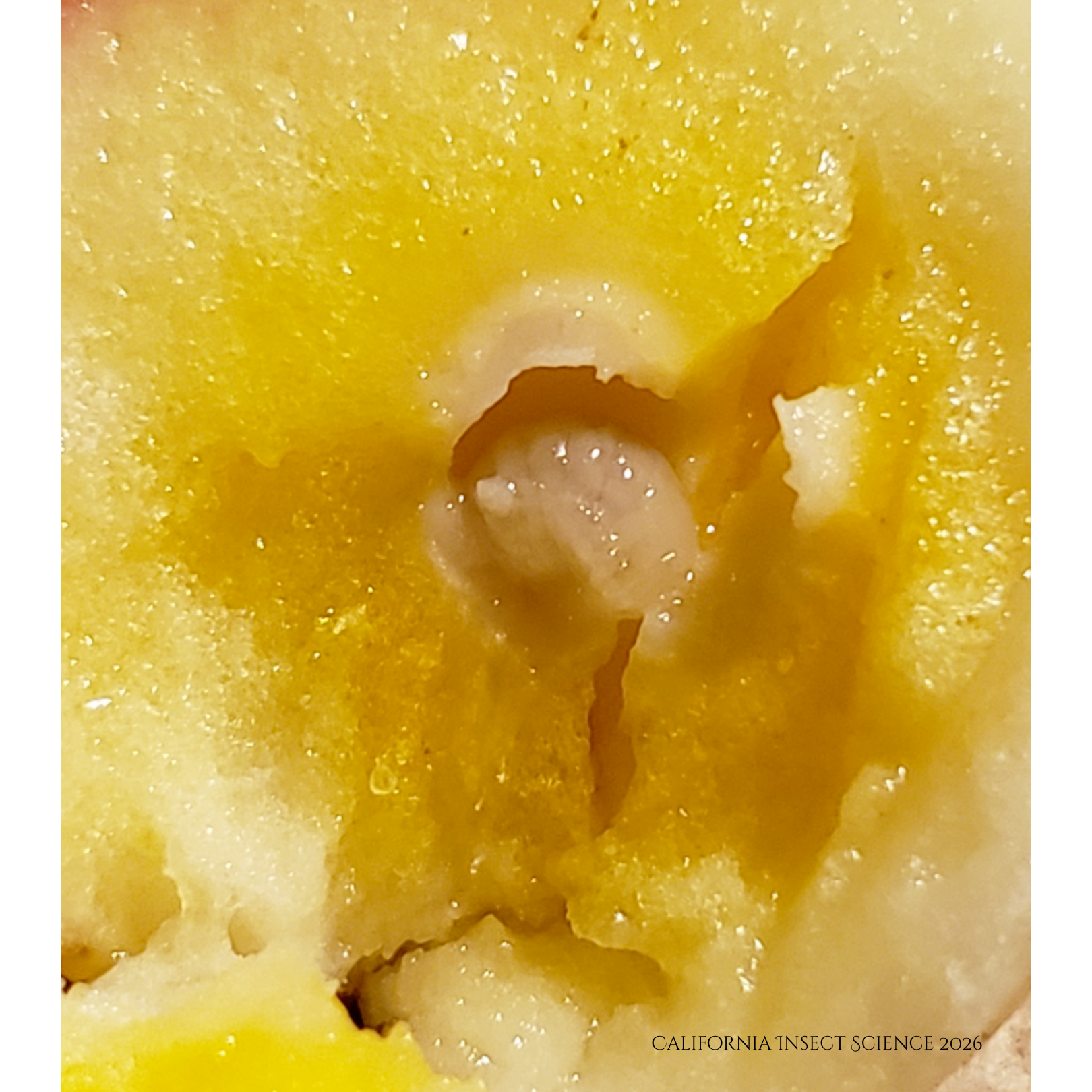
The larva of California gall wasp, Andricus quercuscalifornicus, within the developing gall.
And, of course there are parasitoids of these wasps and here’s a look at them during their development deep inside the gall.
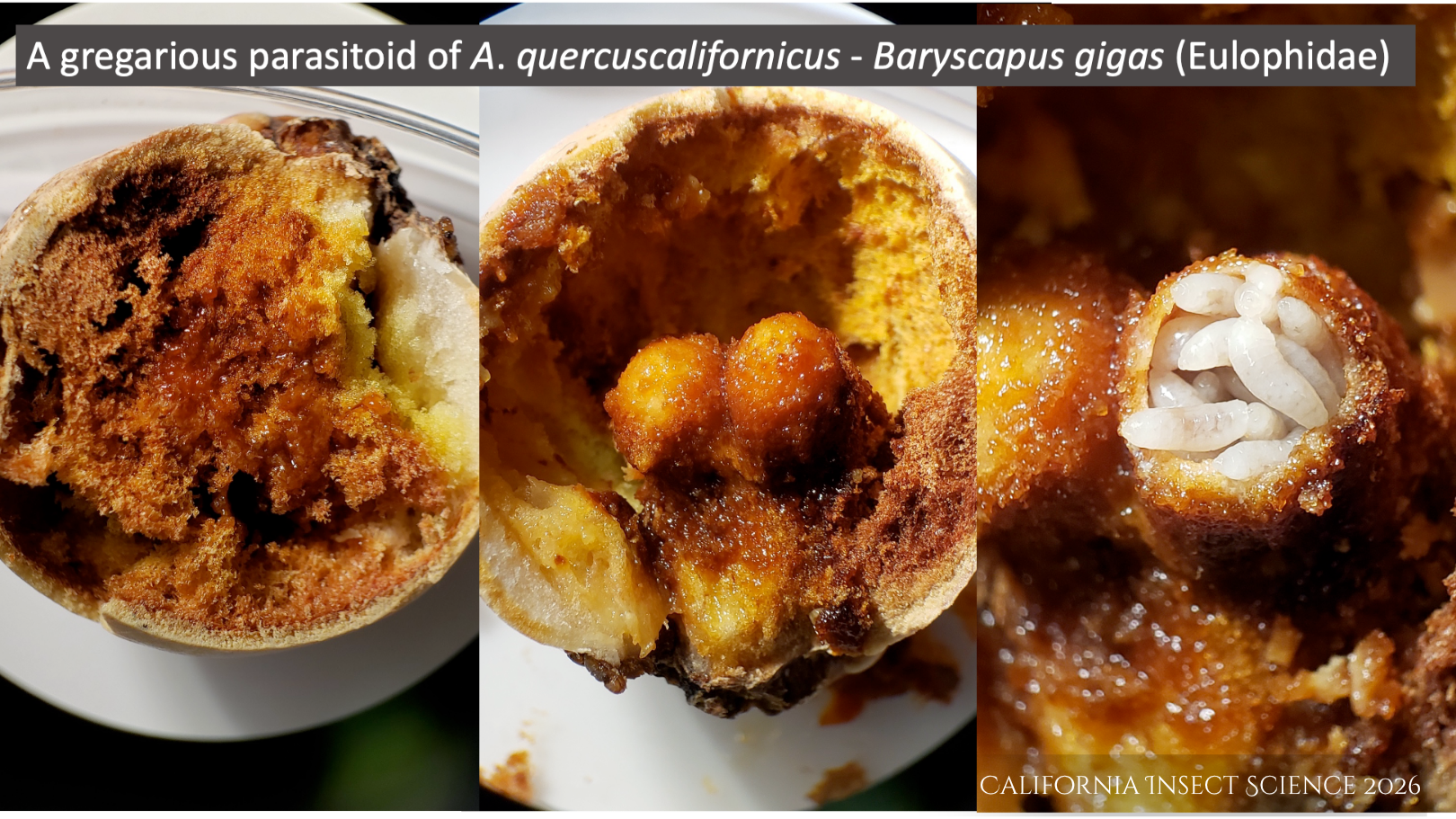
The development of A. quercuscalifornicus, Baryscapus gigas Eulophidae inside a gall. Left, the gall has been opened after it had fully dried. Removing the spongy excess inside the gall (center), we can see two locules formed by gall maker larvae. Gall makers feed on the inner walls of these locules, meaning that most of the gall remains unconsumed. But at some point during the gall’s development a female Baryscapus gigas came along and used her ovipositor to drill into the gall, through the locule wall, and lay about 20 eggs into the developing larva of the Andricus gall maker. A locule opened up (right) exposing not a gall maker, but a mass of Baryscapus parasitoid larvae after they had finished consuming the gall maker larva. Once these parasitoid larvae become adults, they chew their way out of the gall to become free living adults.
And here is one adult Baryscapus gigas after it emerged from the gall.
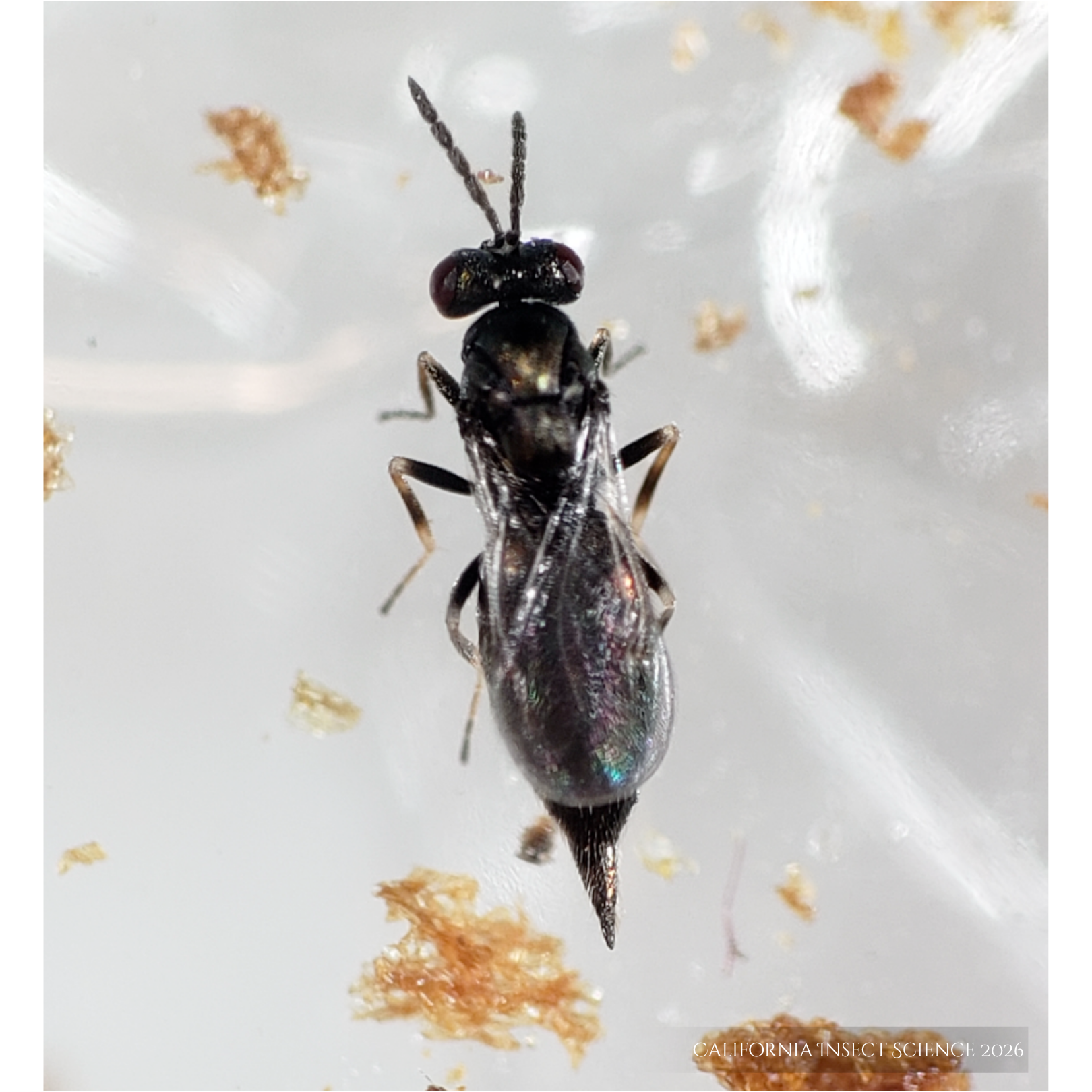
Baryscapus gigas after emerging from the gall.
The two main oak species on Santa Cruz are California live oak, Quercus agrifolia, and island scrub oak, Quercus pacifica. The island scrub oak is neoendemic (recently evolved and only found on) Santa Cruz, Santa Rosa and Santa Catalina Islands. This means whatever galls we find, may be new or only found on the island, or both! So far our analyses have given us a few tantalizing hints at unique species.
On the west end of the island, the scrub oaks grow much smaller. We dubbed them pygmy oaks, like the mammoths.
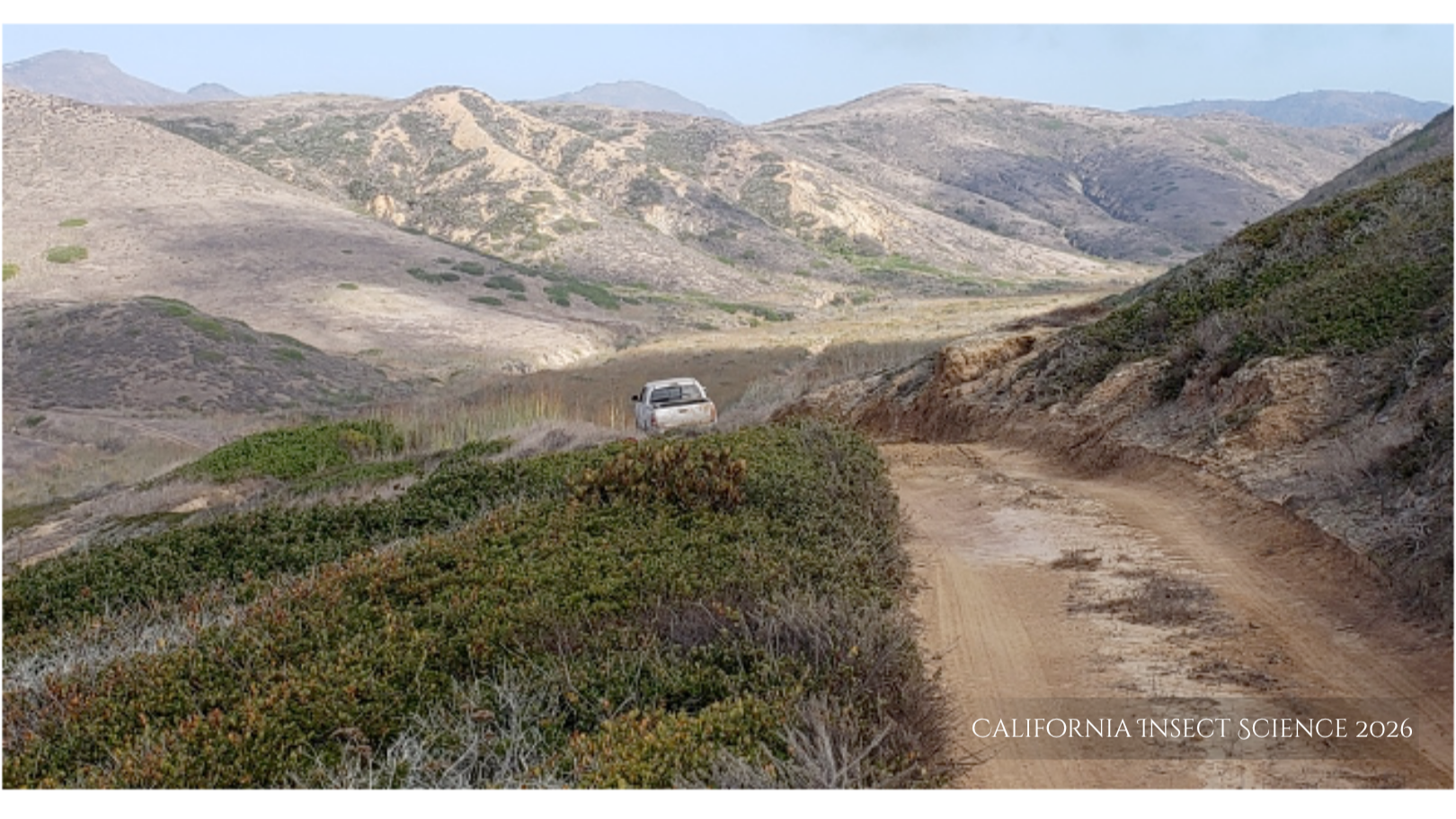
On the left hand side of the road is a stand of pygmy scrub oaks on Santa Cruz Island. They are just a foot or so in height.
We found an undescribed type of gall on these pygmy oaks.
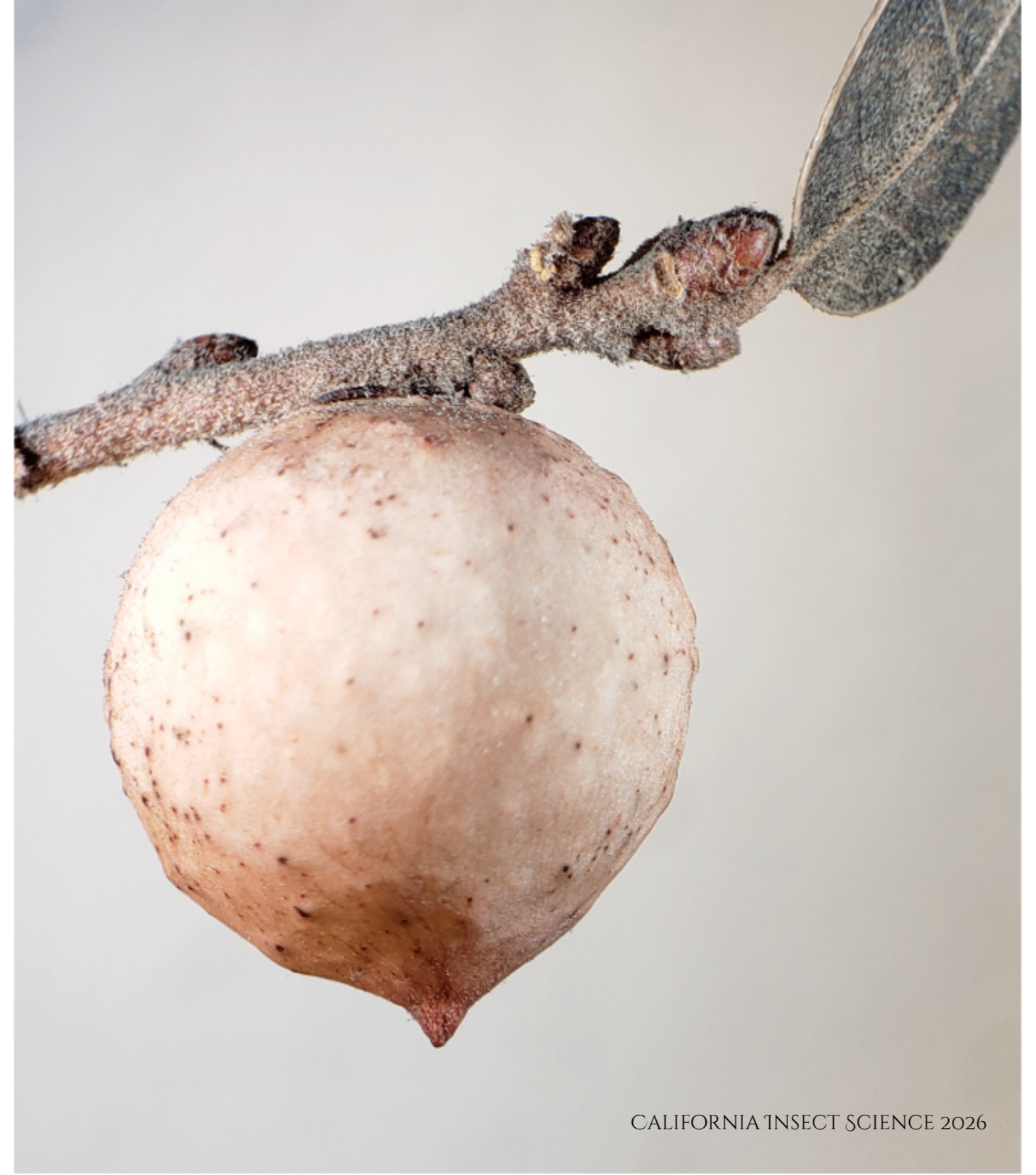
An undescribed gall found on pygmy oaks, Santa Cruz Island.
Inquilines
We collected samples and held them in mesh cages until the adult gall makers emerged so we could identify them. What we got instead was more confusion.
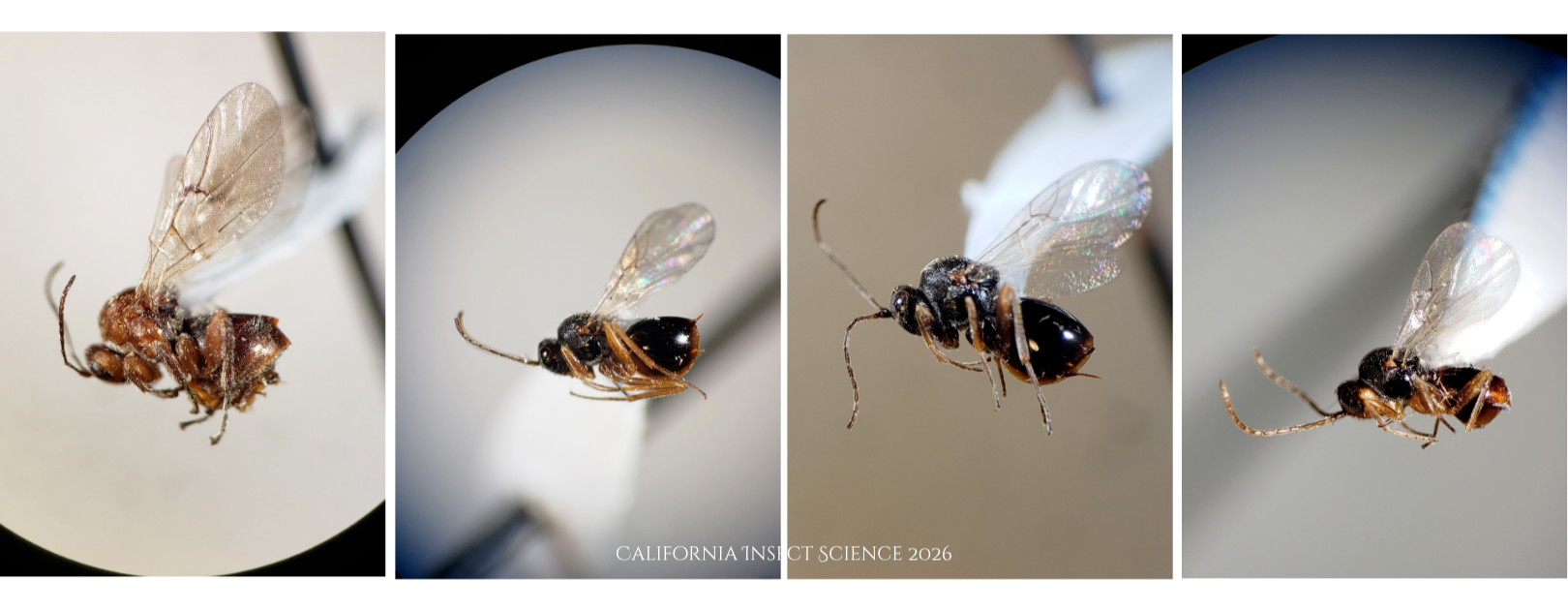
Four wasps that emerged from the undescribed gall on pygmy oaks.
On the left is a putative gall maker, but the three to the right also emerged from the collected galls. And they, too, are cynipids. But these three didn’t induce the galls they emerged from, so what are they doing? They are referred to as inquilines. The term comes from the Latin word inquilinus, meaning lodger or tenant. Modern Spanish still uses the word inquilina (or inquilino) to refer to a tenant. These three wasps on the right are making use of the gall, likely killing off the original gall maker, then taking over the functioning of the gall and using it for its own development.
And much like the honey badger, the parasitoids don’t care. They are going to parasitize the gall’s original maker or squatters.
And here are a few parasitoids of these gall species: The top two are unnamed and may be new species. The third image is Ormyrus distinctus.
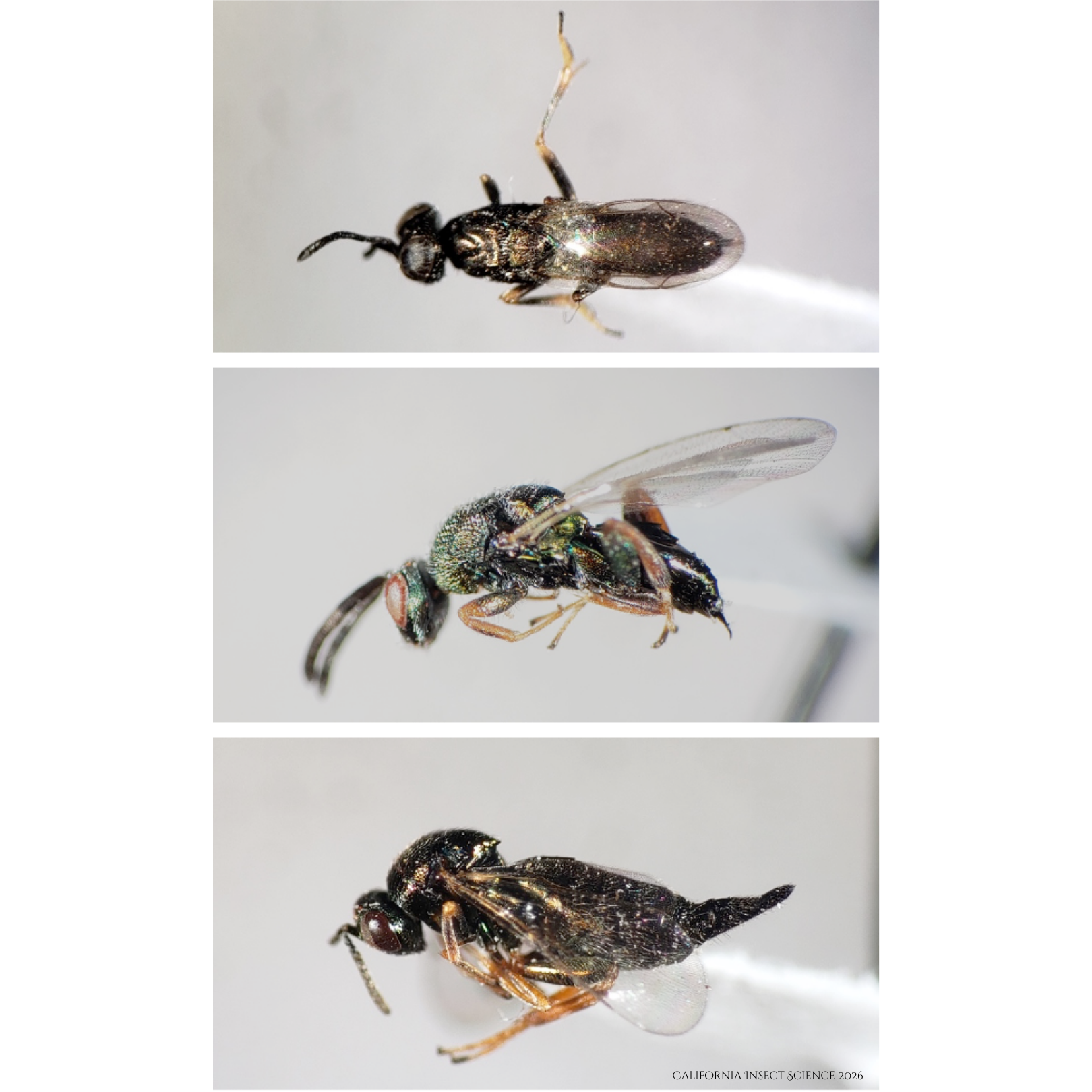
Three distinct parasitoid species of gall makers on pygmy island scrub oaks. The bottom image shows Ormyrus distinctus, the top two are as yet, unnamed.
The island scrub oak is host to a mind blowing number of galls. Here are just three, two of which are known and one is undescribed.
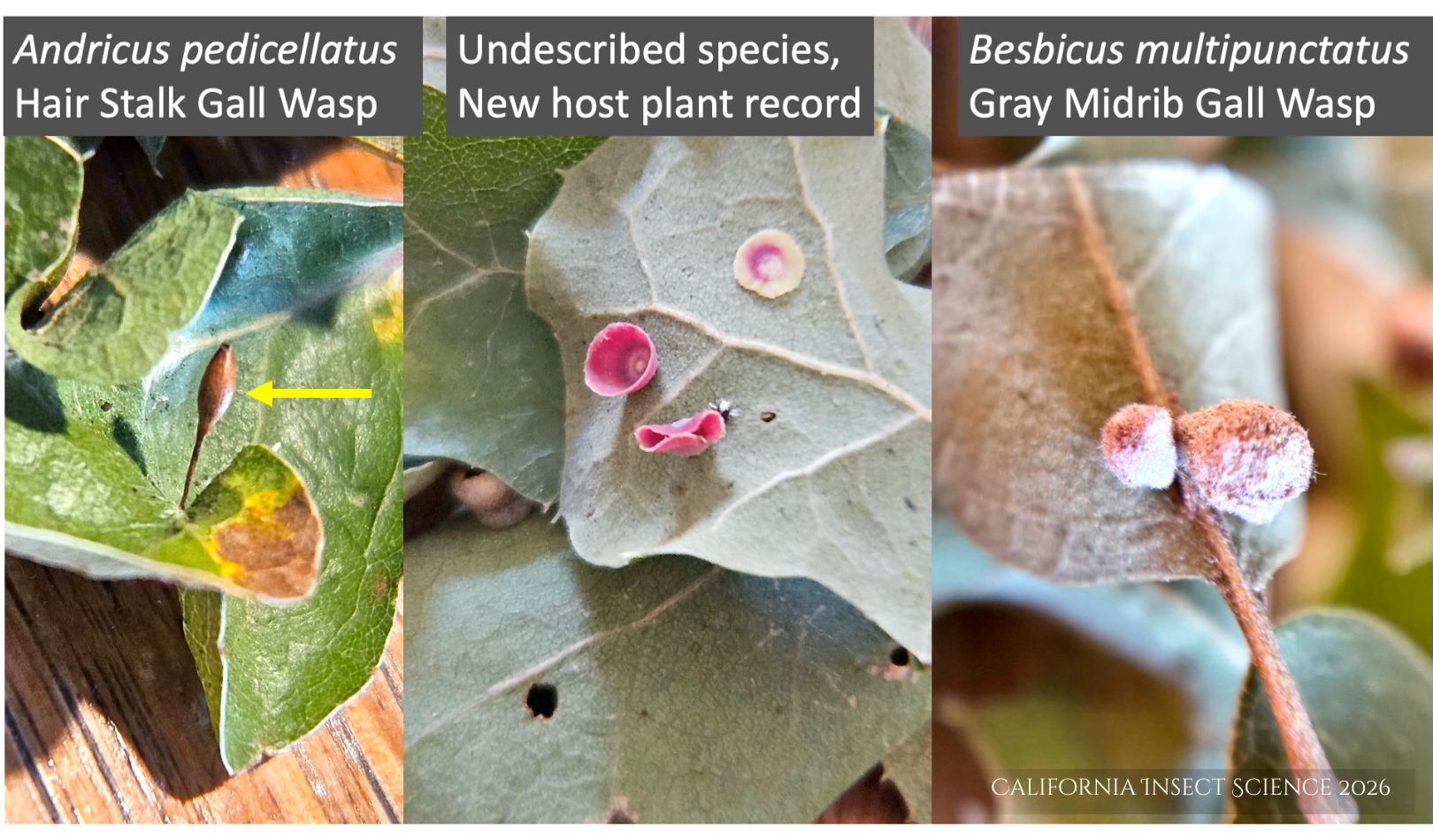
Left, gall caused by Andricus pedicellatus , Hair Stalk Gall Wasp; center, undescribed gall never before recorded on Island Scrub Oak; right, gall caused by Besbicus multipunctatus, Gray Midrib Gall Wasp.
You can find several galls on just one leaf. Here’s one leaf with five different galls!
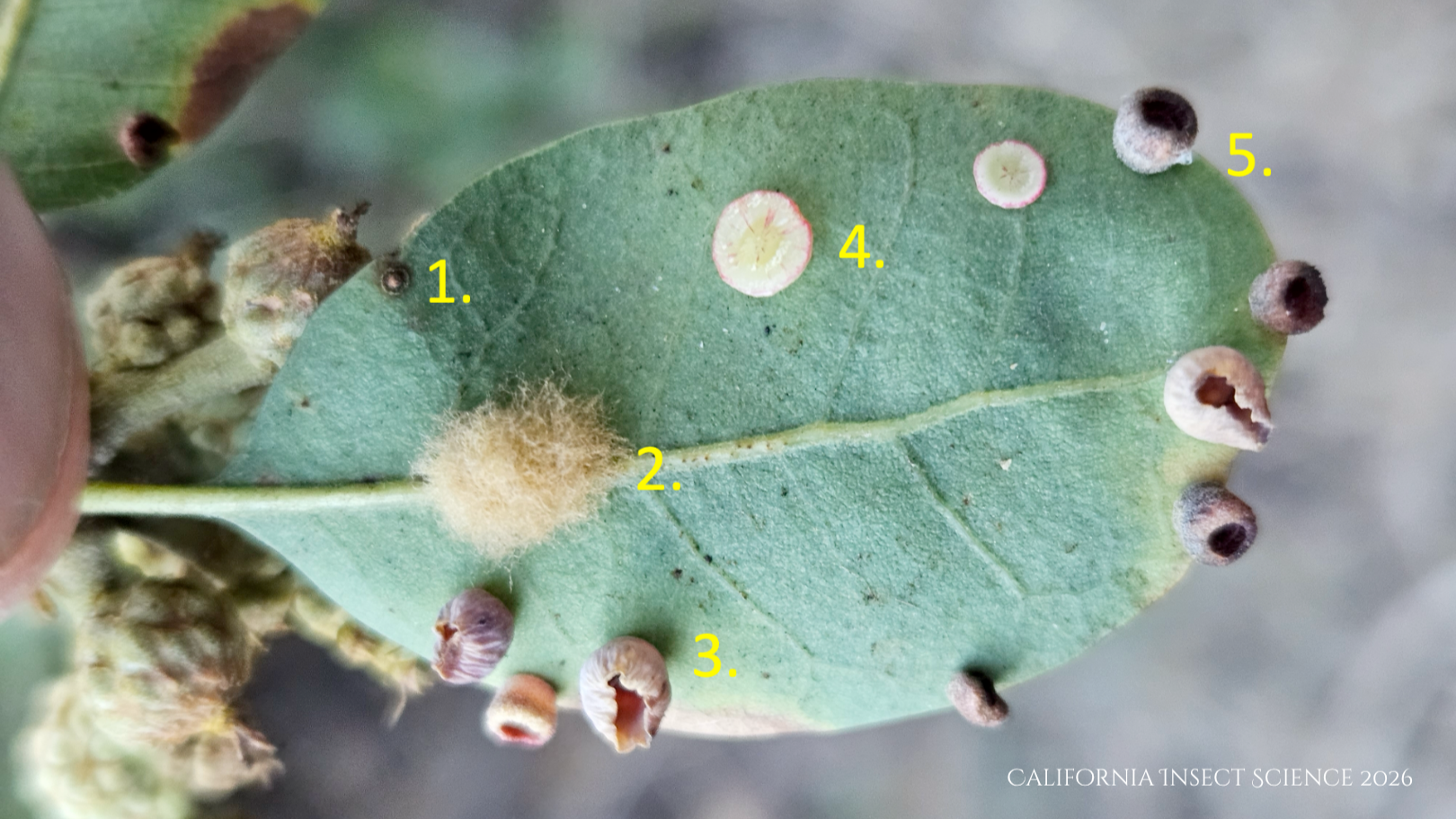
One oak leaf with 5 different galls on the underside of the leaf.
Gall makers come in a range of sizes. The California gall wasp mentioned above is one of the largest species. Whereas its congener, Andricus parmula, the disc gall wasp, is very tiny.
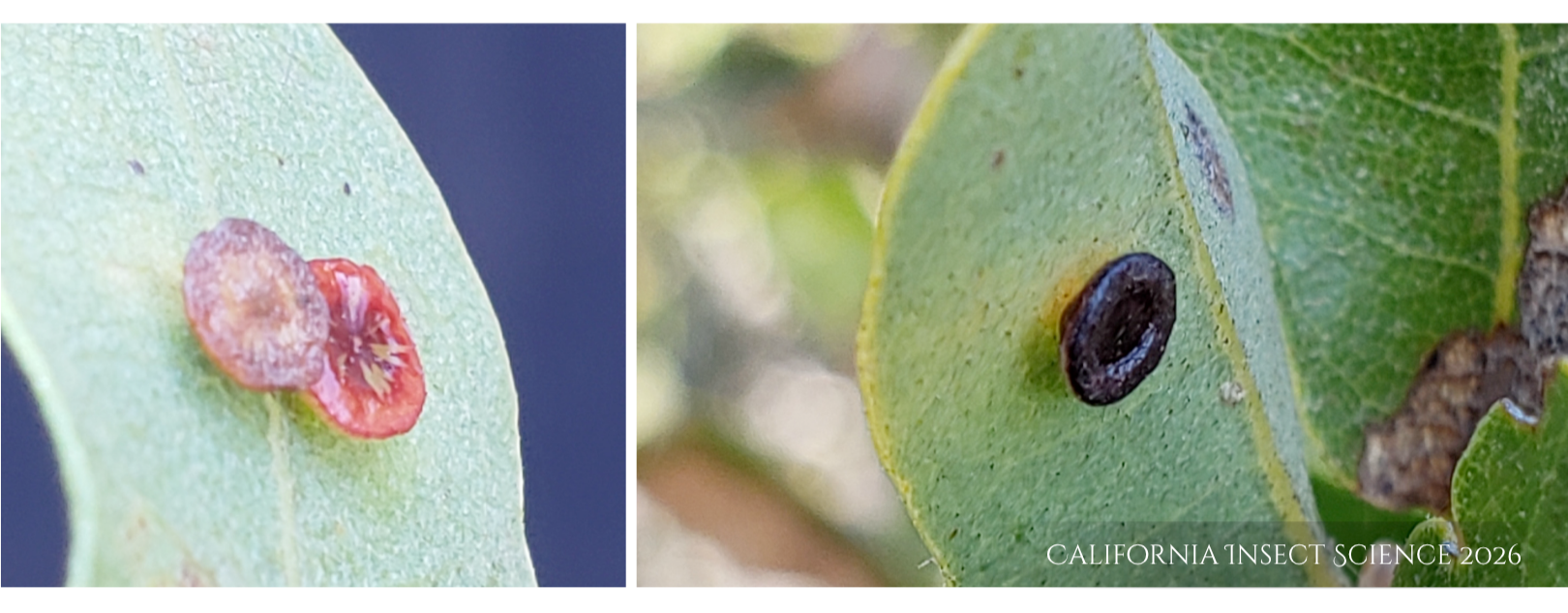
Disk galls on scrub oak.
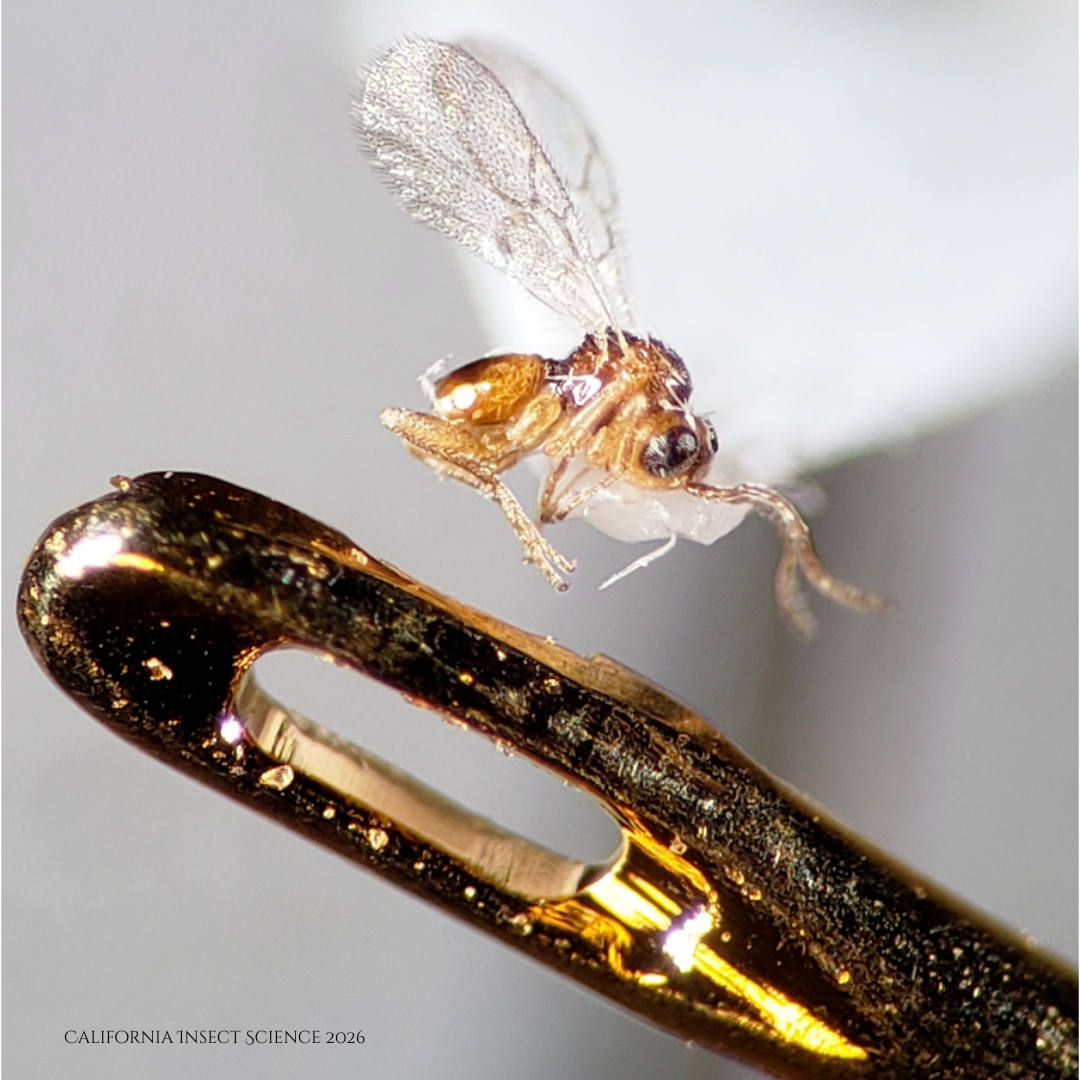
Comparing the size of the very tiny Andricus parmula, maker of disc galls, to the head of a sewing needle.
Andricus parmula and A. quercuscalifornicus side by side:
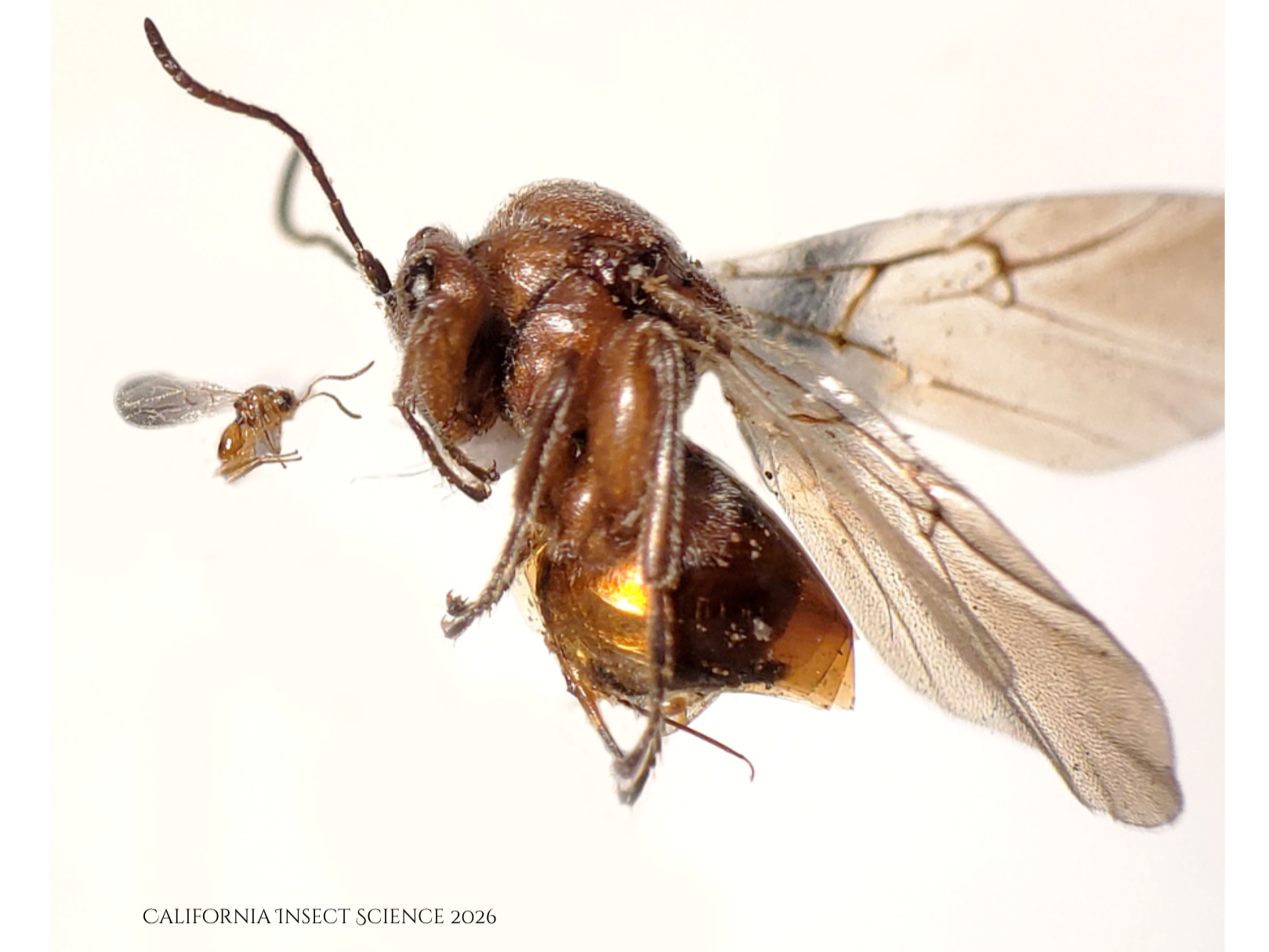
Comparing the size of Andricus parmula, the disk gall maker with the much larger A. quercuscalifornicus, maker of large apple galls.
While the island has charitably given up a few of her gall secrets, she continues to hold on to one in particular.
By accident, we came across something that really didn’t look like a gall at all (yellow arrow). It was at the growth point of acorns on a stem. Two adjacent acorns had developed fully, and both had been attacked by a well-known gall maker that had already exited (see the dark holes near the base of the acorns). Another nearby acorn never developed. The other structure was hard, woody and unusually shaped with no observable nut developing; we refer to it as a pip gall. And when I opened it up, sure enough, it contained a larva of a gall wasp.
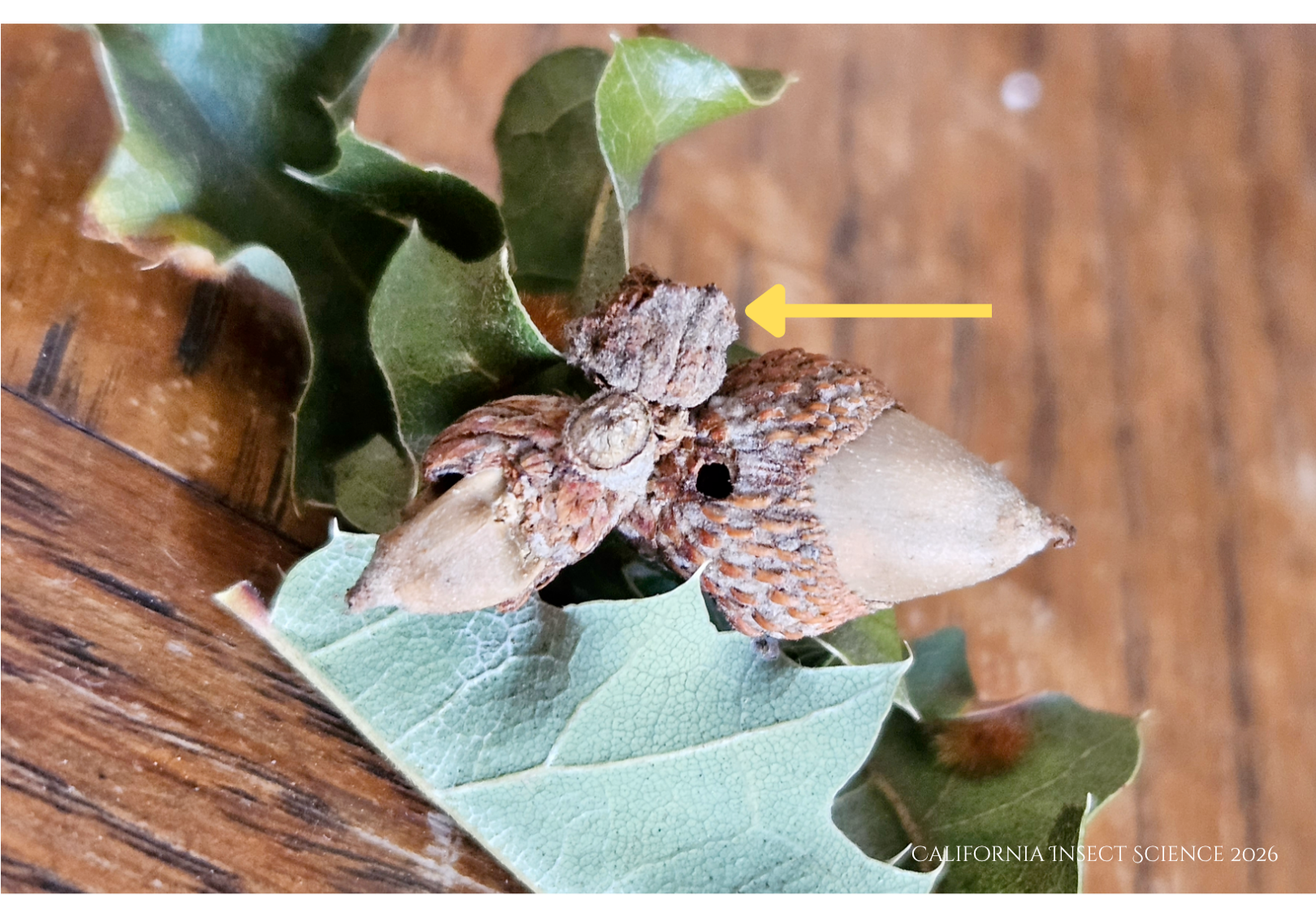
The arrow is pointing to a gall that developed between two acorns with exit holes.
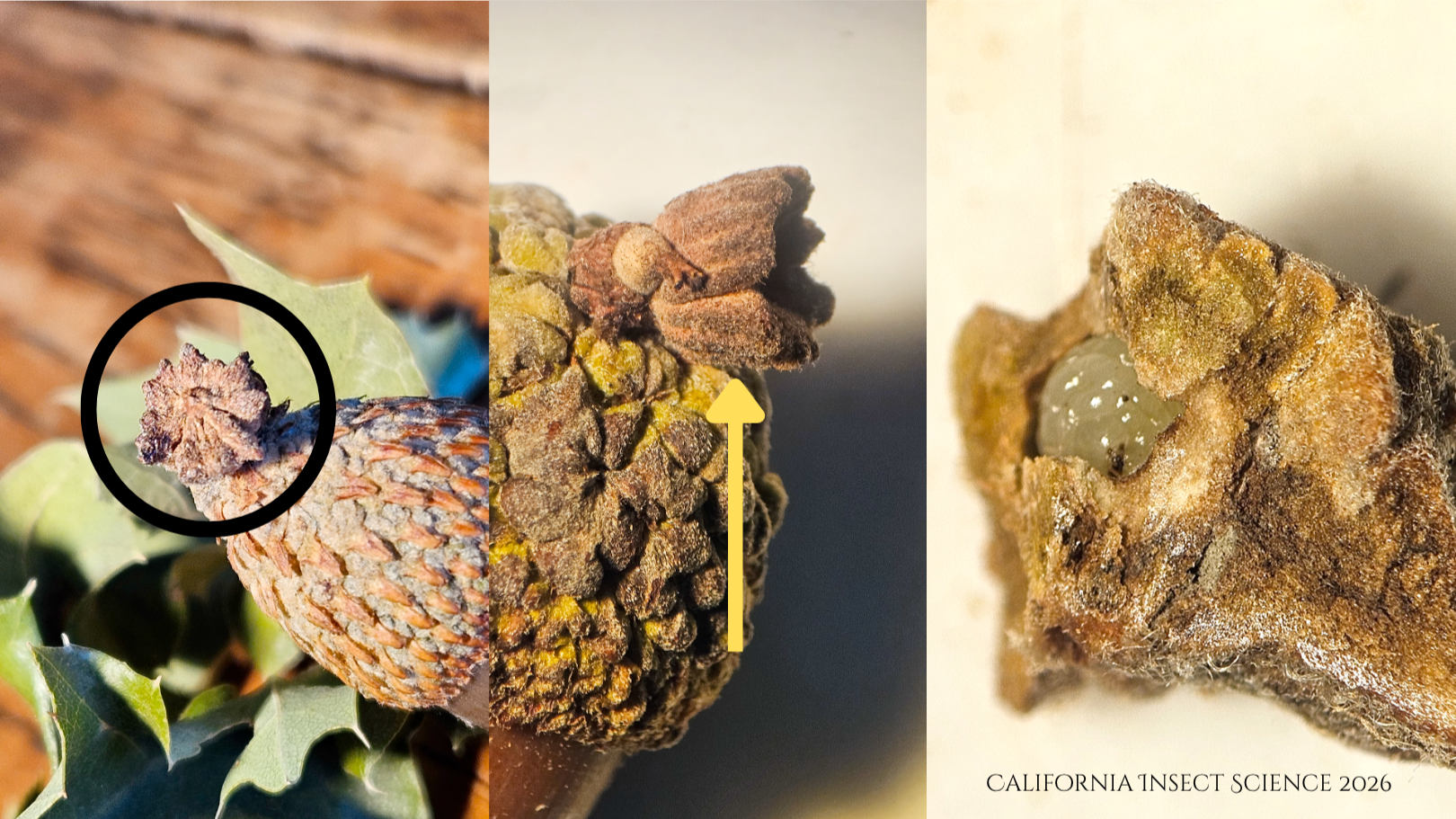
Left, the circle shows the placement of the pip gall at the base of an adjacent acorn. The pip gall was supposed to be an acorn before the gall maker re-engineered it. Center, the arrow is pointing to a side view of the pip gall, and at its base is a small acorn that never fully developed, which is normal for an oak tree. Right, gall cut open to show the larva of an inquiline gall wasp inside.
I had only four of these galls. I put them in a chamber to wait for the adults to emerge. And I waited. And waited. It took half a year before, finally, one adult gall wasp emerged - and it wasn’t a parasitoid, which is so often the case. I consulted with a gall wasp expert at the University of Edinburgh and was told that what emerged was an inquiline, not the gall maker. I was so bummed. Turns out that the likely story is when the inquiline is in the gall, it remains on the plant until the adult wasp emerges. But if the true gall maker is in the gall, the gall dislodges from the tree in late spring/early summer, drops to the ground, hidden amongst the leaf litter. It remains there until the adult emerges and flies up to the tree to lay eggs for the next season’s galls.
Next Steps
For now, the island’s secret remains hidden, which means that I’ll need to return and carefully sift through loads of leaf litter in hopes of finding these little indistinct galls. I’ll also hope that an adult gall maker emerges, not a parasitoid. Until then, the mystery continues.
So far, we’ve only had the opportunity to explore Santa Cruz Island. Therefore, we don’t know if any of these new species occur on the other islands. And now with the accidental fire on Santa Rosa, the reality is that we will never fully know what may have been lost.
Loss of biodiversity extends far beyond numbers on a ledger; it is a profound disruption of unique ecosystems. Safeguarding these ecosystems should not require government regulations or societal pressure. Instead, it should come from an internal, personal desire to protect the lands that surround and sustain us. We here at California Insect Science are committed to learning about and cataloging insect biodiversity and sharing what we know with others in the hopes they will develop an appreciation for life’s diversity and a desire to preserve it.
Restoration
Speaking of which, the Santa Barbara Botanic Garden has been doing excellent conservation work on the Channel islands, including Santa Rosa. In a fire-related update (e-newsletter, May 22, 2026), they described their previous work on storing the germplasm (seeds) and living specimens of Torrey pines and four federally endangered rare plants (two of which are only found on Santa Rosa) among many other plant species known from the burn area on the island. Once they can get back on the island, they will help assess which recovery efforts are needed. Their curated reserve of seeds and plants will help restore the island after the fire runs its course. There are only two groves of Torrey Pines in the world, in north San Diego and on Santa Rosa Island. The Santa Barbara Botanic Garden recently established the Torrey Pines Conservation Grove that has 45 genetic lines from the island population, with an additional 40 Torrey pines being cared for in their nursery by their horticulture team as back-up. They had them as insurance in the hopes they would never need to be used. We are all grateful they had the foresight to put resources into this living bank that is now very much needed.
Sources:
Island dwarfism and gigantism: J. Bristol Foster. Evolution of Mammals on Islands. Nature in 1964.
Genetics Unzipped: Island Life
Channel Islands Serve as Reptile Evolution Laboratory: National Park Service
The Island Rule of Island Dwarfism
The Santa Rosa Island Fire: The Guardian, May 23,2026
Galls:
Field Guide to Plant Galls of California and Other Western States (Volume 91) (California Natural History Guides), by Ron Russo. Available through online retail book sellers.