
What Good are Rattlesnakes?
I often get asked what good is this or that species? Does this insect or animal that annoys or frightens serve any beneficial purpose? Can’t we just eradicate them?
The question came up again recently when I was training state park docents. Things got pretty philosophical and we had a brief discussion about ecology and the web of life.
Folks sometimes feel that a species has to have a tangible benefit for humankind to justify its existence. We don’t ask what good are monarch butterflies. Instead we question species we fear and don’t fully understand; creatures like the much maligned rattlesnake.
Beliefs and Song Lyrics
Taking a deeper dive and double-checking my college philosophy notes, all of the major belief systems have something to say about the value of a species. The Rig Vedas speak about every species as being born of the Earth to exist in harmony, forming an interdependent web. The Tao Te Ching emphasizes the interdependence of all living things and allowing all living things to live in accordance with their own nature. Zen Buddhism is emphatic that all living things are worthy of respect simply because they exist. The Analects of Confucianism provides the framework of ecological ethics, suggesting that humans have a moral obligation to care for the natural world. And a Judeo-Christian response would be Ecclesiastes 3:1, or along the same vein, flower children of the 60s would quote Chris Hillman’s song “Turn! Turn! Turn!” And the most ancient wisdom of the first peoples refers to plants and animals as being our oldest teachers and that we are all a part of a community, each with inherent value.
So, what of rattlesnakes? People fear them. I’m momentarily scared when I’ve unexpectedly encountered one, but am also fascinated by them. So, I have a healthy respect. Other folks are more than happy to be rid of them. In a widely celebrated event, the annual Sweetwater Rattlesnake Roundup in Texas, involves catching, beheading, and skinning thousands of rattlesnakes in front of thousands of tourists. It is a barbaric practice that doesn’t achieve any sensible pest management, ecological or public safety goal; it just makes money and headlines.
I’m here to advocate for leaving the rattlesnakes alone, to live in accordance with their own nature. Unless, they have wandered into your yard or business or other area frequented by people and pets. In those instances, there is a reasoned management response that is best for the snake and people.
Rattlesnakes as Biological Control Agents
As discussed in the March blog on squirrels, western rattlesnakes are a key player in controlling California ground squirrels and other rodents. During the warm season, they encounter an average of four prey per day within their home range.
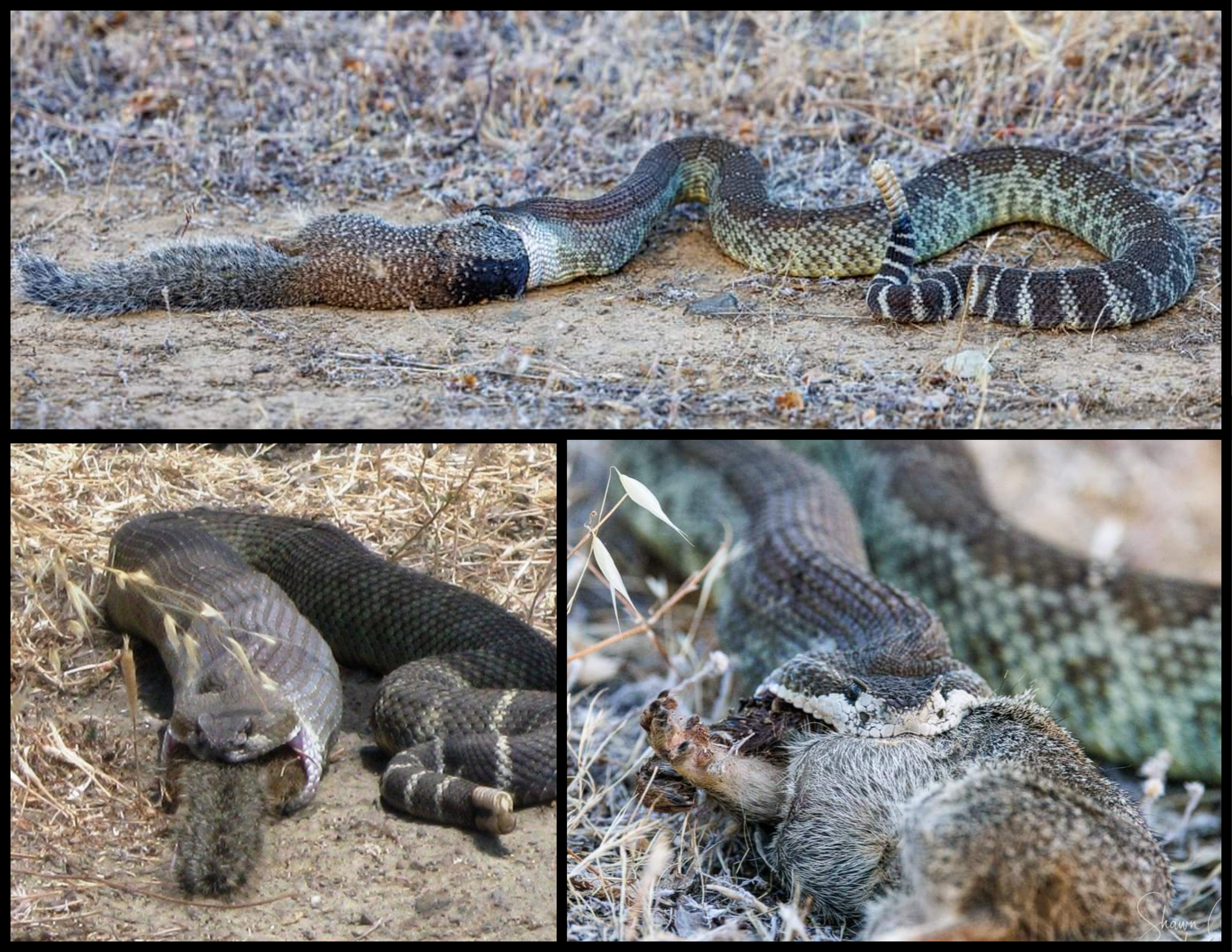
A rattlesnake consuming a ground squirrel. Photographer unknown. These images were shared with me years ago, but I cannot recall who. If you happen to be the photographer of these fine photos, please do let me know - info@californiainsectscience.com.
Forty percent of young squirrels in burrows are consumed by rattlesnakes.
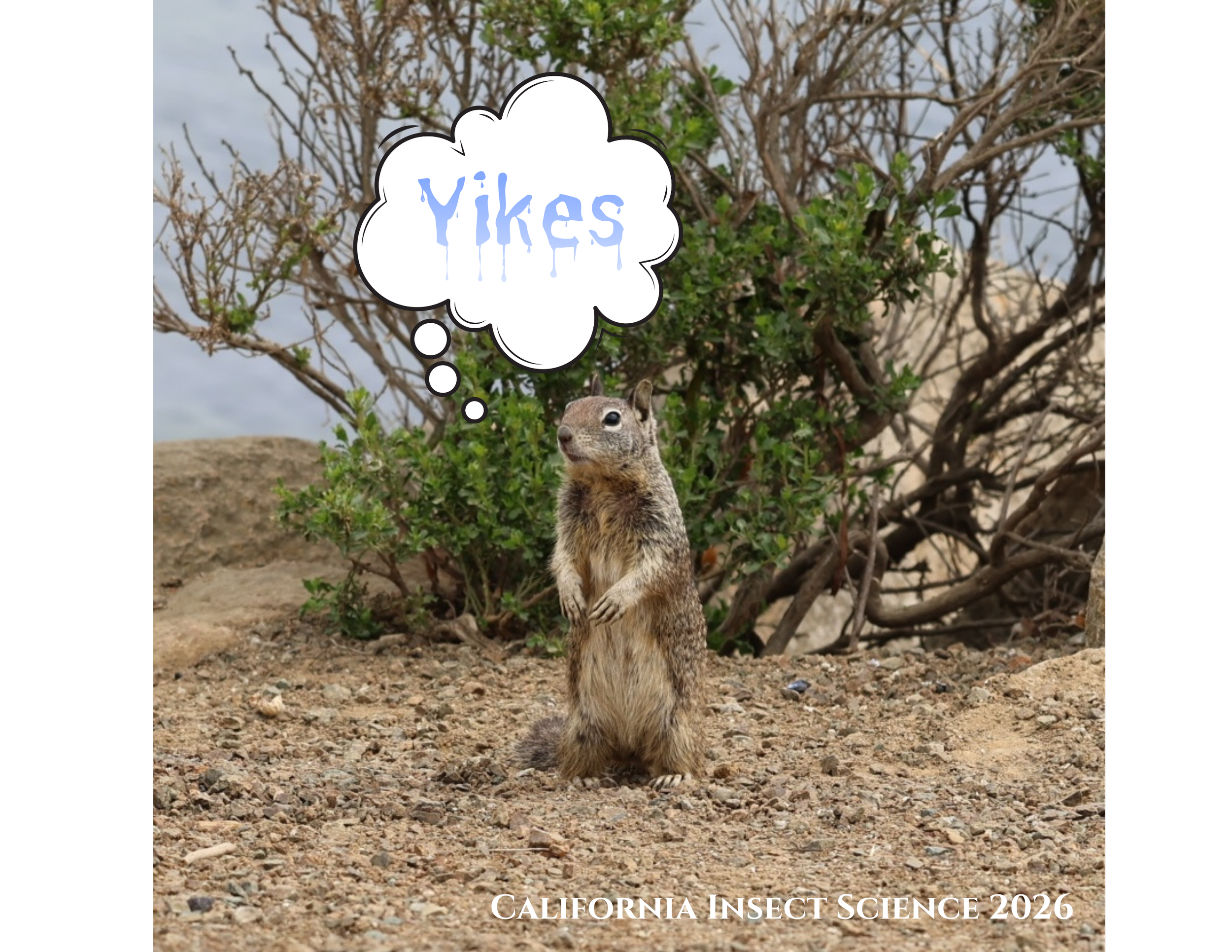
California ground squirrel, Morro Bay, California, 2026.
Western rattlesnakes and ground squirrels have a long, co-evolved predator/prey relationship, as illustrated by these maps showing their geographic distribution.
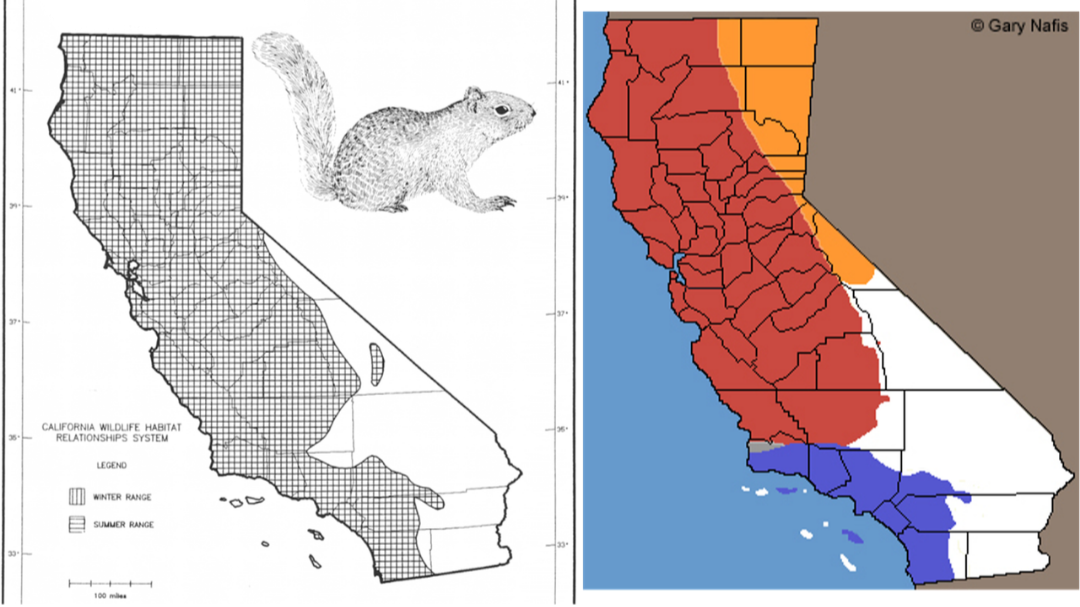
California Wildlife Habitat Relationships System. California Department of Fish and Wildlife, M072, Zeiner et al., 1988-1990. California's Wildlife. Vol. I-III. California Depart. of Fish and Game.
The map on the left shows where California ground squirrels occur. The map on the right shows where California’s western rattlesnake species occur. It’s clear that where there are squirrels, there are western rattlesnakes. Conversely, no squirrels, no snakes.
Rattlesnakes are shy and retiring creatures that do their best to stay out of the way. They only defend themselves when they are disturbed and feel threatened.
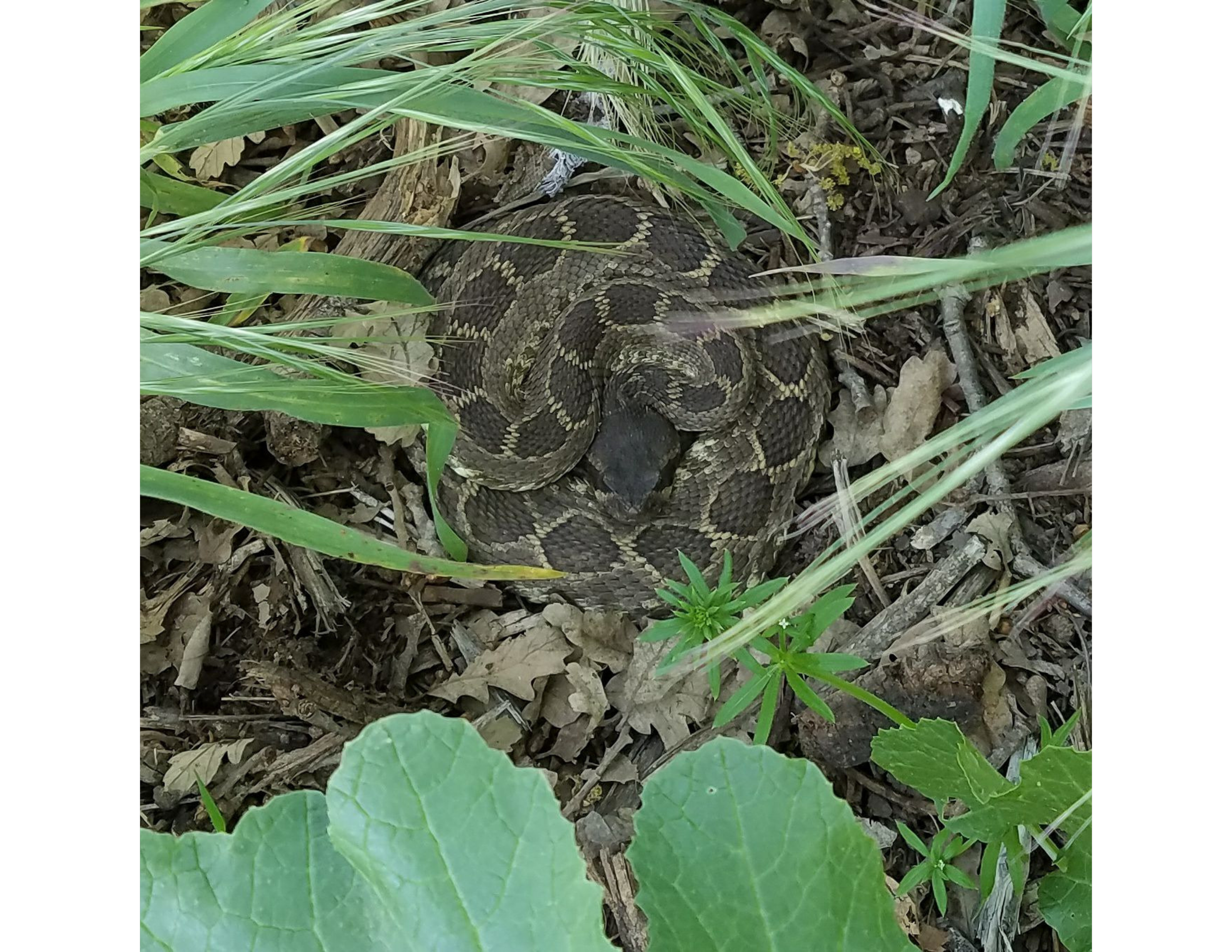
Tucked away, hidden and content. Emily Taylor, Central Coast Snake Services.
Rattlesnake Research and Family Bonds
There is much we still don’t understand about rattlesnakes. Recent research has shown us that rattlesnakes are quite social and have complex relationships.
Rattlesnakes have strong family bonds. Pregnant female rattlesnakes group together with relatives, oftentimes with sisters. Rattlesnakes are good mothers, after giving birth to living young, they protect their brood for several days. And when a mother rattlesnake needs to go out and hunt for food, she will leave her newborns under the watchful eyes of her sisters while away. Yes, the aunties play an important role here by babysitting each other’s kids!
Findings also show that rattlesnakes have “friends” - snakes they prefer to spend time with over others. They also den together in groups during the winter. Another study showed that a rattlesnake's stress or anxiety can be reduced when they are in the presence of their friends, a phenomenon called social buffering.
Rattlesnakes are also homebodies. They don’t have a territory in the traditional sense, but they do have high site fidelity. They use a specific area for hunting, hibernating, and hiding. They spend their lives within a 100 yard radius of a preferred den. They memorize the locations of food, shelter and water and they will share this home range with other rattlesnakes. They do not defend or protect this area from other snakes.
They will stay put if food is abundant. However, if resources dwindle, they will seek out other areas to hunt, and they will do so carefully because when they are in an unfamiliar area they are vulnerable to other predators.
Check out Project RattleCam to get an up-close view of a rattlesnake den. As of this writing, the rattle cam in Colorado is live. The rattle cam in California is expected to go live in May.
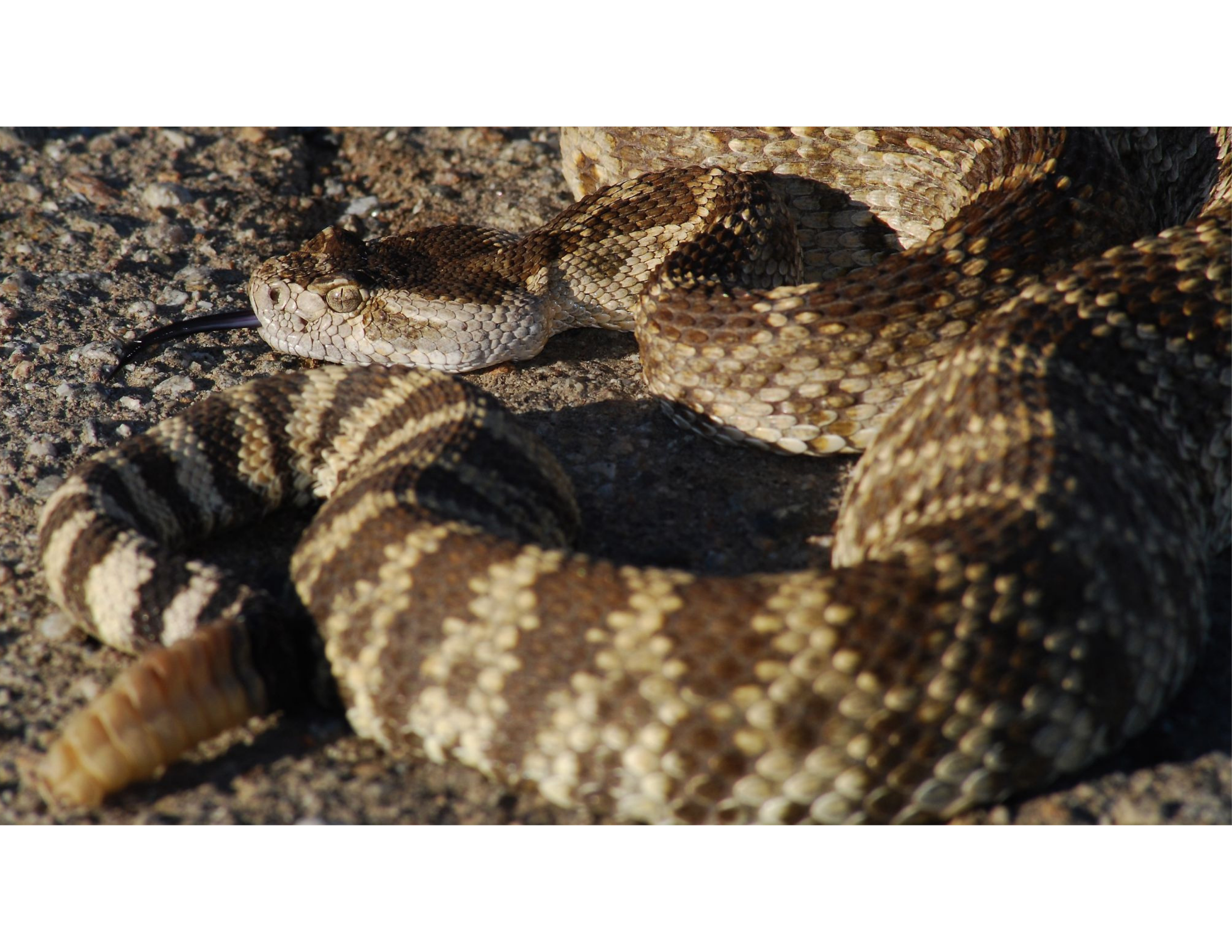
Basking in the sunlight. Emily Taylor, Central Coast Snake Services.
Best Practices for Rattlesnake Management
Their social behaviors inform the best practice for dealing with rattlesnakes that find their way onto our properties looking for new food supplies. Killing rattlesnakes is not recommended, if for no other reason, it’s a dangerous thing to do. The best method is to relocate them, which requires trained professionals.
Relocation should be within a ¼ mile of where they were found. If they are moved further away into an unfamiliar area, they have almost no chance of surviving. Trained professionals will know where to relocate snakes to ensure they have plenty of food and which minimizes the chances they’ll come wandering your way again. On the Central Coast, we are fortunate to have Central Coast Snake Services. Their team promptly responds to calls and relocates snakes for free. They offer dog aversion training, which effectively trains dogs to have a healthy fear of rattlesnakes to keep them safe. They also train and certify individuals and businesses on the techniques of safe handling and relocation so they can move snakes from their own properties.
Rattlesnake Bites
Rattlesnakes account for the majority of the roughly 7,000 to 8,000 venomous snake bites annually in the U.S. Thankfully, fatalities are rare, with approximately 5 to 6 deaths per year (0.5%). The statistics shed light on human behaviors that can increase one's chances of being bitten. Boys and men aged 17-27 constitute the highest percent of bite victims. The statistics also show that alcohol is a major factor influencing their poor choice to approach a snake in the first place. 85% of the bites occur on the hands or fingers. Yep, that tracks.
Western diamondback rattlesnakes are the species usually involved with a fatality. Unfortunately, 2026 has been an unusual year in California with three fatalities as of this writing. The first was in March involving a young male mountain biker in Orange County. Again in March, a female hiker in Ventura County. Then in April, an elderly female was bitten three times by an unknown species of venomous snake in Mendocino County.
There have been over 70 cases of rattlesnake bites reported in California in the first three months of the year, which is far more than normal. California normally has one or no fatalities related to rattlesnake bites. The best explanation at the moment is that rattlesnake populations are likely higher now due to previous year's heavy rainfall. That rainfall led to lots of vegetation, which led to higher populations of species that feed on that vegetation = rodents. Rodents are snake food. So when there are more rodents, ultimately there will be more snakes.
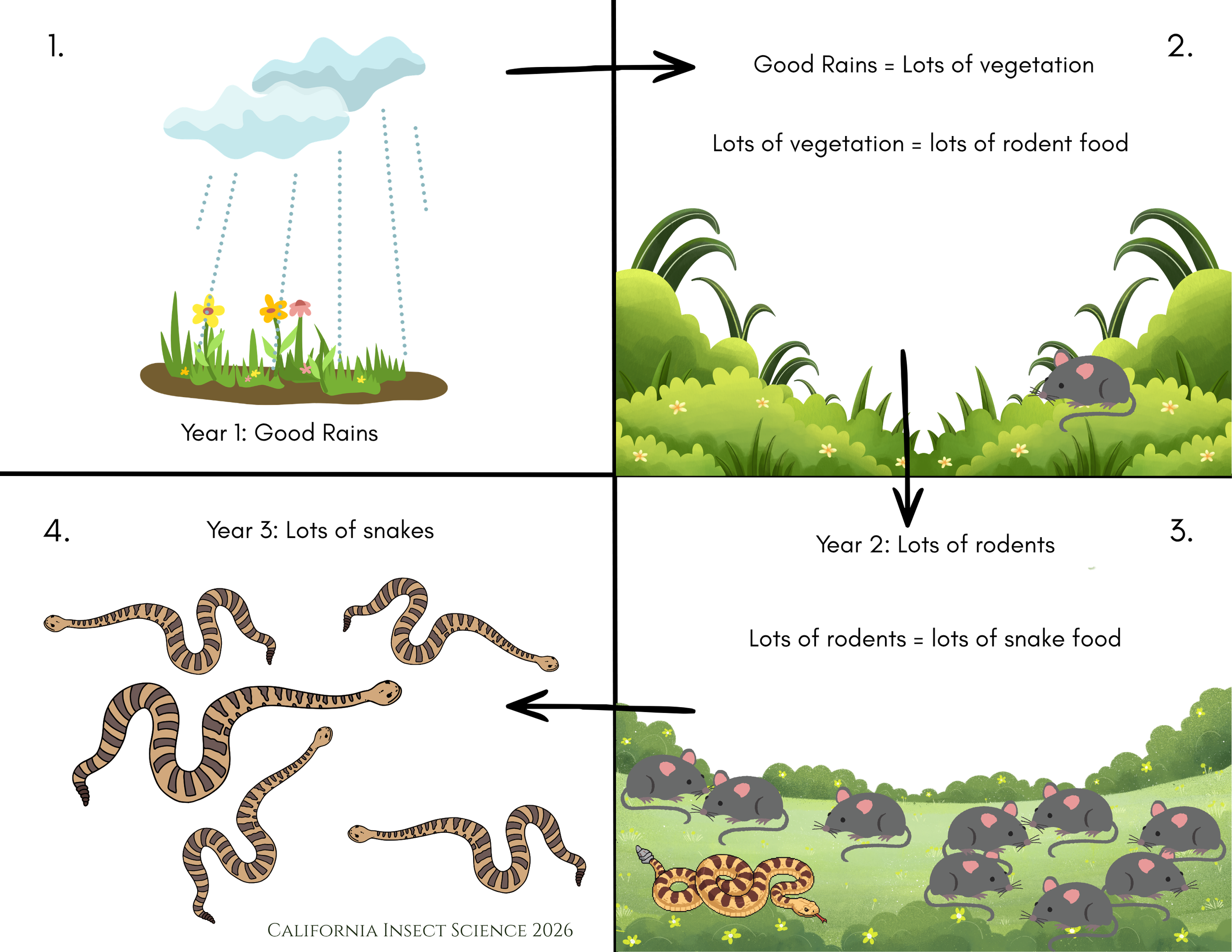
Good rains are followed by dense vegetation growth, which leads to an increase in rodents that feed on the vegetation. An increase in rodents results in an increase in snakes.
The unusually warm winter and the heat wave in March brought out the snakes from hibernation early, while also bringing out the hikers and mountain bikers. The math is pretty clear.
Stay safe when out on the trails.
Proceed with caution and know the facts. You are 6 times more likely to die from a dog attack or lightning strike than a rattlesnake bite. Approximately 25% of rattlesnake defensive bites are “dry”, meaning no venom is expressed; it is metabolically expensive for snakes to make, so they don’t want to waste it.
Wildlife experts urge hikers to stay on marked trails, wear proper boots, and keep pets on leashes. Snake activity is highest from April to October, during the best hiking months. Hike with a buddy, keep a phone handy, stomp your feet to make some noise before reaching in to touch a plant or take a photo. Should a bite occur, keep the victim calm, rinse the bite area with clean water only, seek medical attention immediately. As importantly: do not cut the bite wound, do not try to suck out the venom, do not apply a tourniquet, do not ice the wound, and do not let the victim drink alcohol. Any of these will only make matters worse.