
We're Managing the Wrong Squirrels: The Breeding Stock Problem Nobody Talks About
Most species have their life cycle play out over the annual seasonal cycle - fall through summer. California ground squirrels, the #1 vertebrate pest species in California, breed once in a seasonal cycle (= once a year).
Ground squirrels are rodents that dig deep burrows. In these burrows they have their living spaces where they begin the breeding season in December/January. Gestation is one month and weaning is 5 to 8 weeks. That means juveniles emerge from their burrows to begin independent foraging as early as March and April and peak during May and June.
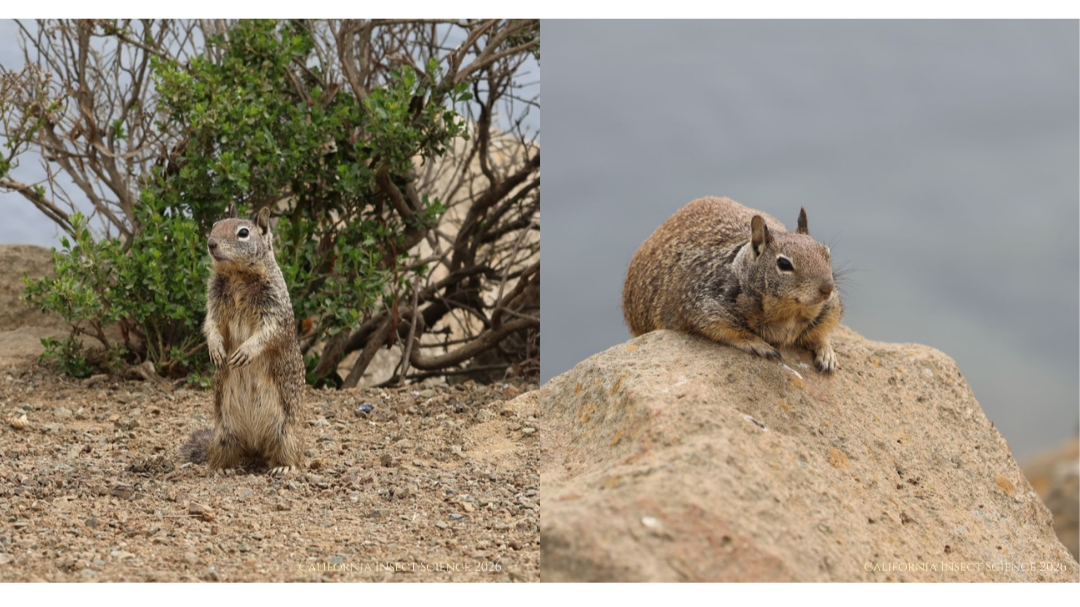
A juvenile and adult ground squirrel, Morro Bay, CA, 2026.
What we see above ground is an apparent explosion of squirrels flooding the landscape, which is referred to as the annual spring surplus.
Back in 1943, researchers tracked populations of ground squirrels at an 80-acre site in California’s Bay Area and discovered the following population trends.
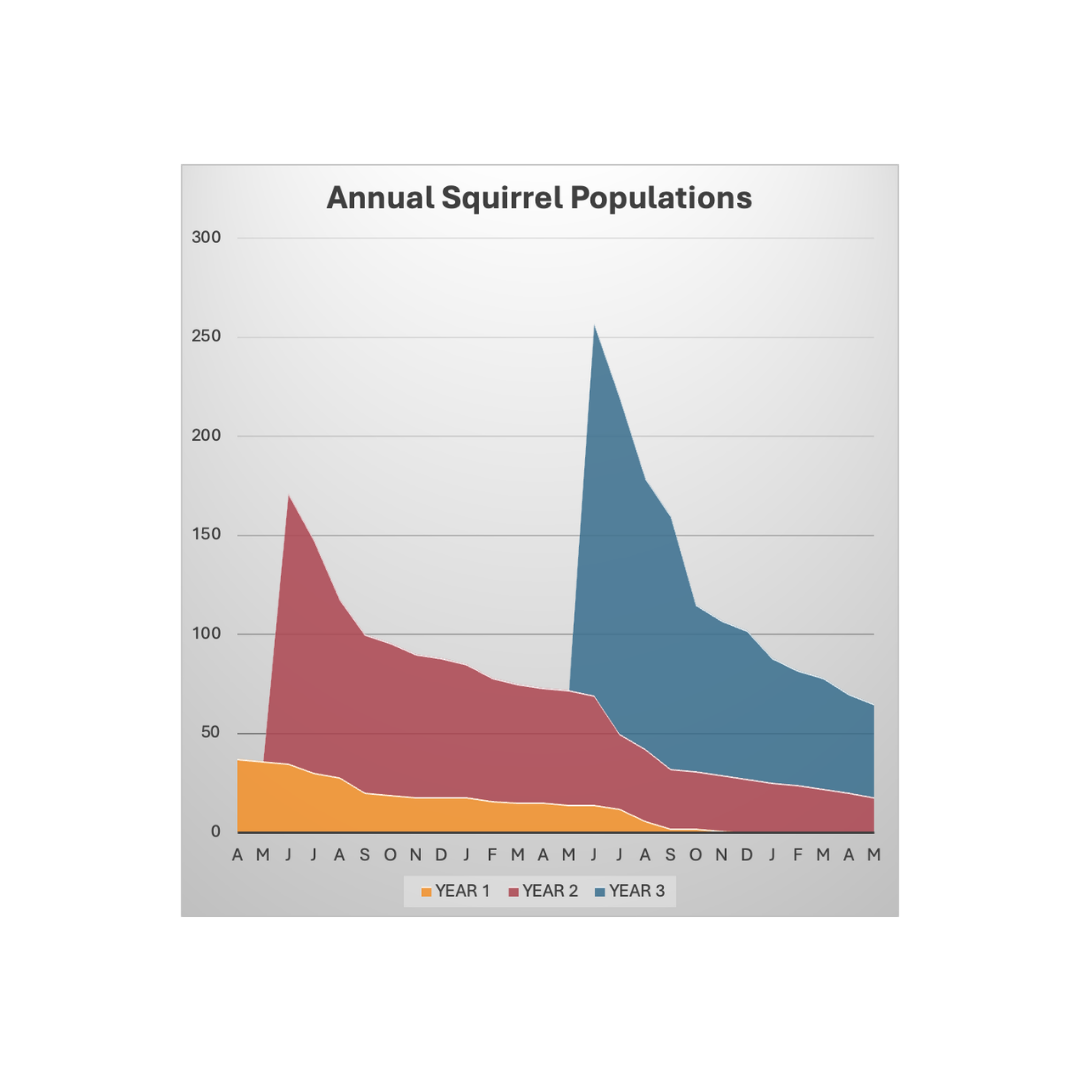
Adapted from F. C. Evans and R. Holdenried, 1943.
What’s interesting about this graph is how steep the population jump is in May (M), it’s nearly vertical. These are the juveniles emerging from the burrows to begin living as an independent squirrel. But after the peak there is a rapid decline leading to a fairly flat slope starting in September (S) through the start of the next breeding cycle in December (D).
Predators
Why is there a steep population decline during the summer? Natural predators. Common squirrel predators in California include the following.
Coyotes
Coyotes consume 9-10 rodents per day or one to three times their body weight per week. That amounts to 25-40 lbs of rodents per week per coyote.
Red-tailed hawk
A red tail hawk will eat >1,000 rodents per year.
Bobcats
A female bobcat raising three kittens consumes 7,700 rodents per year.
Rattlesnakes
And then there’s rattlesnakes. A rattlesnake will encounter up to 4 squirrels per day. 40% of young squirrels are taken by rattlesnakes in the burrow. Rattlesnakes average about 1 squirrel per day. 53% of an adult rattlesnake’s diet is California ground squirrel, the majority of which are juveniles in spring. Rattlesnakes, it turns out, are a key player in the annual spring population drop for California ground squirrels.
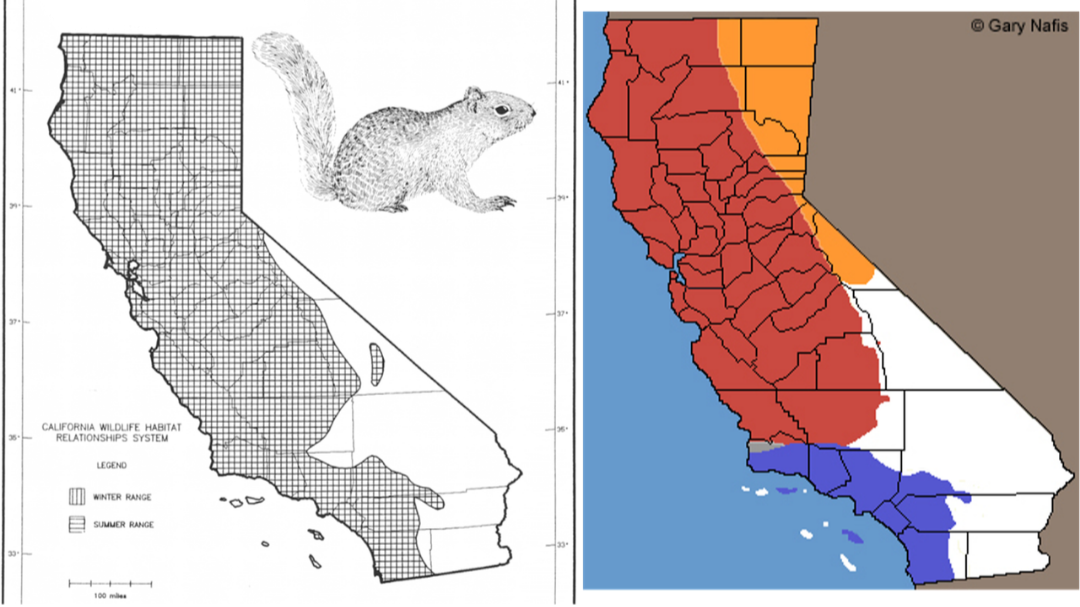
California Wildlife Habitat Relationships System. California Department of Fish and Wildlife, M072, Zeiner et al., 1988-1990. California's Wildlife. Vol. I-III. California Depart. of Fish and Game.
If you look at a map of California ground squirrel range distribution (left) and northern and southern Pacific rattlesnake distributions, the overlap is pretty obvious. Where there are squirrels, there are specialized predators eating them.
The springtime decimation of young squirrels points to a phenomenon in nature that is well understood in wildlife management and hunting circles, but is not talked about enough when considering pest management.
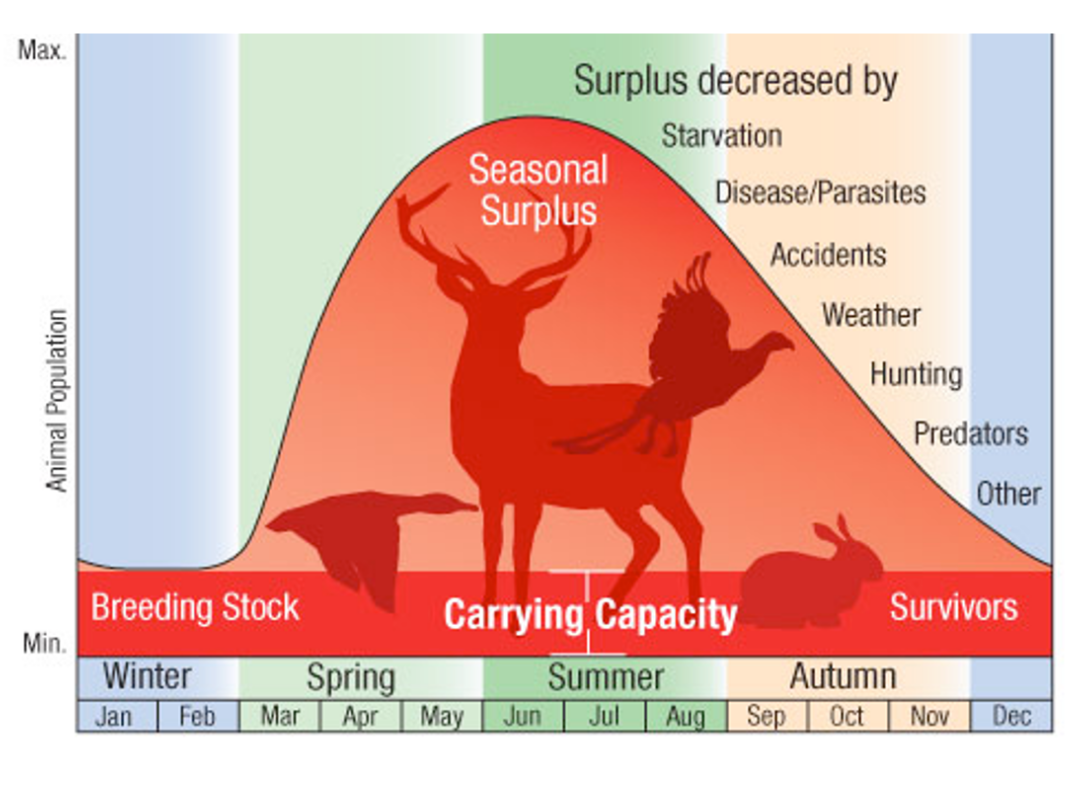
Colorado Bowhunting Education class, Colorado Parks and Wildlife.
This graphic is from the Colorado Bowhunting Education course and does an excellent job of showing wildlife population dynamics. A key point is in the solid red bar near the bottom left labeled “Breeding Stock”. These are the individuals that survived the spring wipe out and will breed the next season. “Seasonal Surplus” is the same phenomenon shown on the Bay Area graphs above. It is the large number of offspring entering the environment for the first time that then experience predation and the other mortality, including hunting.
Here’s what we know for sure. The majority of offspring of most species do not survive. There are very high attrition rates in nature. Think about a plant that produces copious seeds. Most never germinate. Or salmon that spawn and generate huge numbers of eggs. Most of the eggs are eaten by predators. The same goes for squirrels.
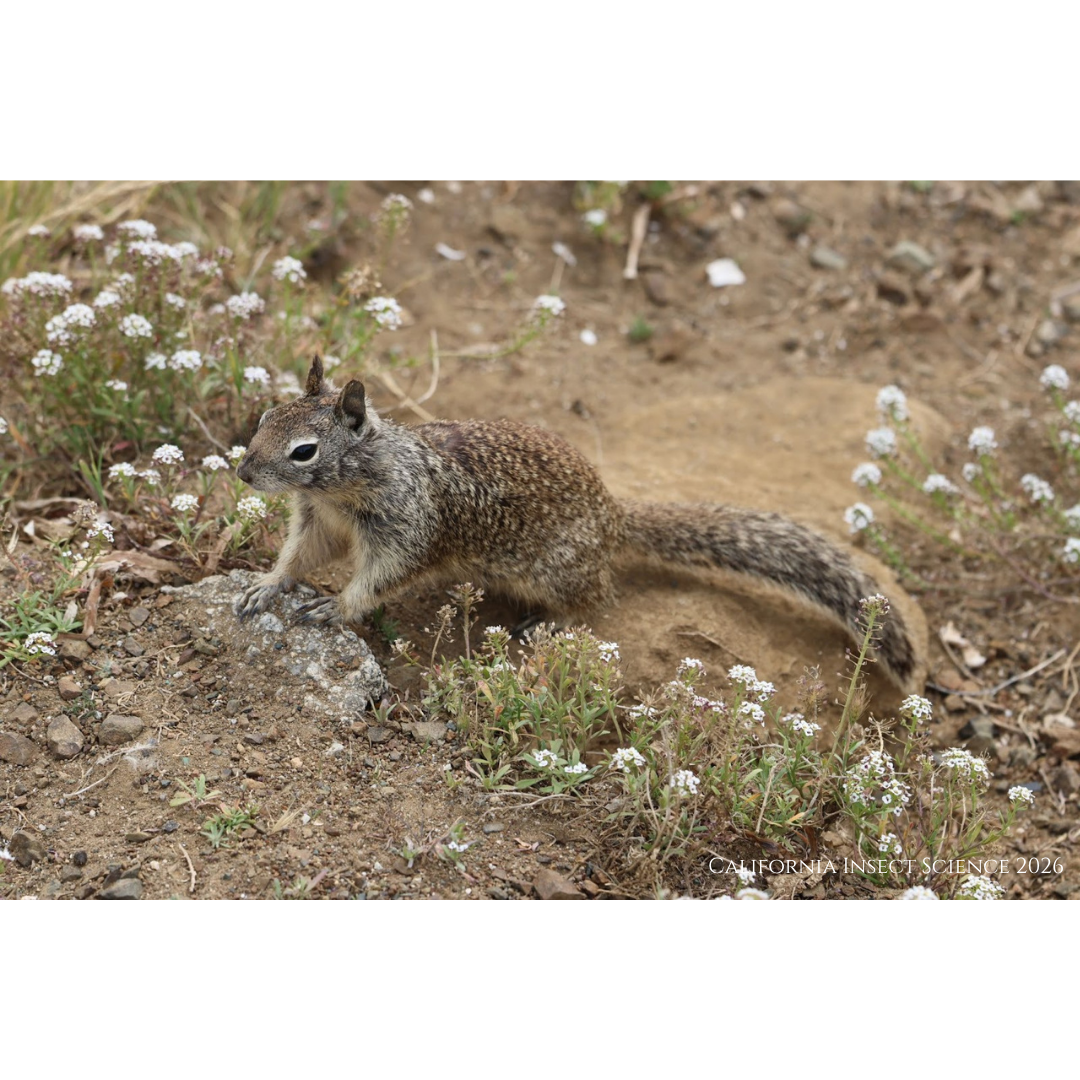
Juvenile ground squirrel, Morro Bay, CA, 2026.
Breaking the Cycle
Here’s where pest management misses the message and why we struggle with the same pests year after year.
We see the spring population surplus, be it vertebrates, weeds or insects, and apply pest management tactics that mimic the activities of predators, accidents, diseases, weather, and other mortality factors. These management tactics can lower a population back down to the “breeding stock” level. We think we’ve done a good job and we got another crop through. But the breeding stock is still there waiting to bring forth another slew of offspring the following year and the pest management cycle begins anew.
How do we break the cycle? The most impactful pest management begins when we start to lower the breeding stock numbers. Then we ask ourselves, if we’ve used pesticides, cultural controls and even biological control, what else is there?
The answer is nuanced. The above tactics were thrown at populations with high numbers of individuals, and it’s visually easy to see the drop off from the peak, just like on the squirrel graphs. It lulls you into thinking you’ve beat them back. While the spring drop off is necessary, again, it’s the breeding stock we need to focus on.
There are tactics that work best when the populations are at really low levels, even imperceptibly low levels. At this point, the work must continue. We have to look for highly specialized, focused mortality. And predators usually fit the bill. For squirrels, it means we need to let the rattlesnakes do their thing and then supplement with other tactics like fumigation in the winter. Only when we employ a pest management strategy focused on reducing the breeding stock will we ever achieve long term, sub-economic, sustainable pest management.
The Effects of Changing Weather Patterns
Seasons in California typically are not straightforward, but this year has been a doozy.
Perhaps you’ve seen the modified, and some say more accurate, version of seasons on social media somewhere and it goes like this…
Winter: January to February rain and cold
Fool’s Spring: Early warm spell
Second Winter: The inevitable late-February/March return of freezing rain/cold
Spring of Deception: Brief, perfect weather that makes you think spring is here, but it's not
The Pollening: Everything spews pollen, allergy medicines fly off the shelf
➡️ Actual Spring: A week or two, maybe in April ⬅️ We are here
May Gray / June Gloom: Gloomy mornings tho it's technically "warm"
First Summer: A week or two of decent weather
Fire: IFKYK
False Fall: A brief cooling
Second summer: Hotter than Hades
Actual Fall: Lovely weather, why can’t it be like this all the time?
In thinking about animal and plant life cycles progressing through the seasonal cycle, it makes you wonder how they respond to the false starts and stops the weather often poses and how it affects their population growth. Simply put, populations will physiologically respond to environmental cues like temperature, day-length, and humidity, and move on with their life cycles. It may mean greater mortality if the weather turns nasty later on, but there will be a portion of the population that survives and carries on. “Life, uh, finds a way” …Dr. Ian Malcom.