
It’s Too Early for White Lined Sphinx Moths
The white lined sphinx moth is a spring migratory lepidopteran species we see in California. A couple of others are Monarch butterflies and painted lady butterflies. The Monarch is the most well-known; painted ladies less so. And white lined sphinx moths are really off the radar for most folks, partly because adults are mostly nocturnal. Mostly, I say, because you can encounter them during the day.
As was the case for a friend of mine who sent me a video he recorded of a white lined sphinx moth buzzing around some flowers in his yard. He asked what the heck it was.
White lined sphinx moth hovering around flowers, February 2026. Video by Joe Aldern.
They grab your attention because they are large, they hover, their wings make a lot of noise and they have some warning coloration…and they’re unfamiliar because you hardly ever see them.
But what piqued my interest wasn’t necessarily the moth itself, but rather, the time of year it was out and about. It’s only February! This species is normally a springtime migrator. In other words, it is a little too early in the year to be talking about the white lined sphinx moth.
The seasonal cycle for this species goes like this: Populations of the white lined sphinx moth reside in the southwest Sonoran and Chihuahuan deserts year round. They produce multiple generations per year and feed on desert-blooming plants in the spring, summer and fall.
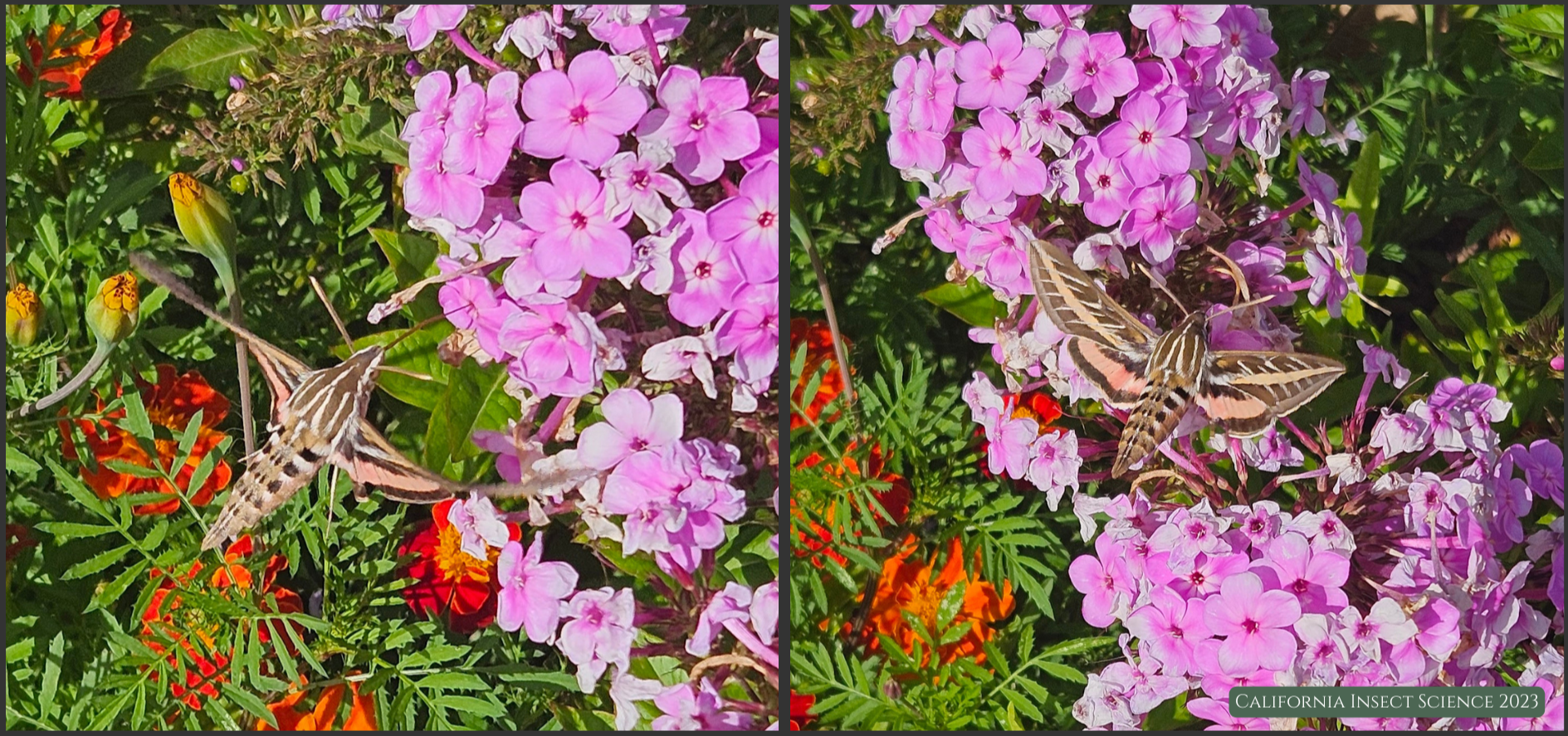
Close up of white lined sphinx moth feeding on flowers. Adults are important pollinators, especially for night blooming plant species.
But many adult moths migrate northward in spring to lay eggs on plants that bloom later as the higher latitudes warm up. Their larvae feed and grow, then pupate and produce the next generation of adults that continue to push northward to lay more eggs on plants coming into bloom at ever higher latitudes. Some later generations may eventually reach Canada by late summer / early fall. However, they cannot survive the winters up there, and so these populations die out. But the desert populations persist, ready to send next year’s adults on their annual migration northward.
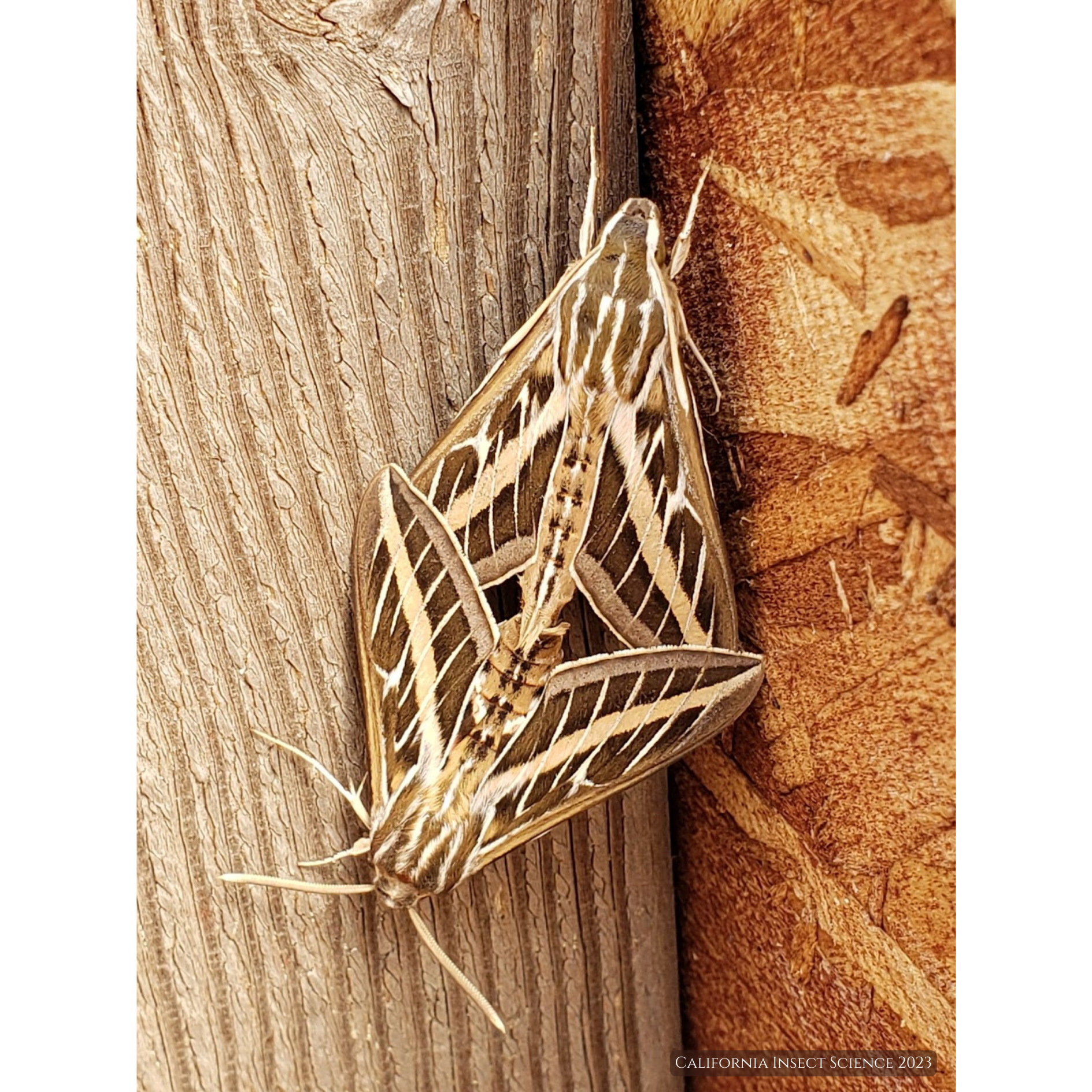
Mating pair of white lined sphinx moth.
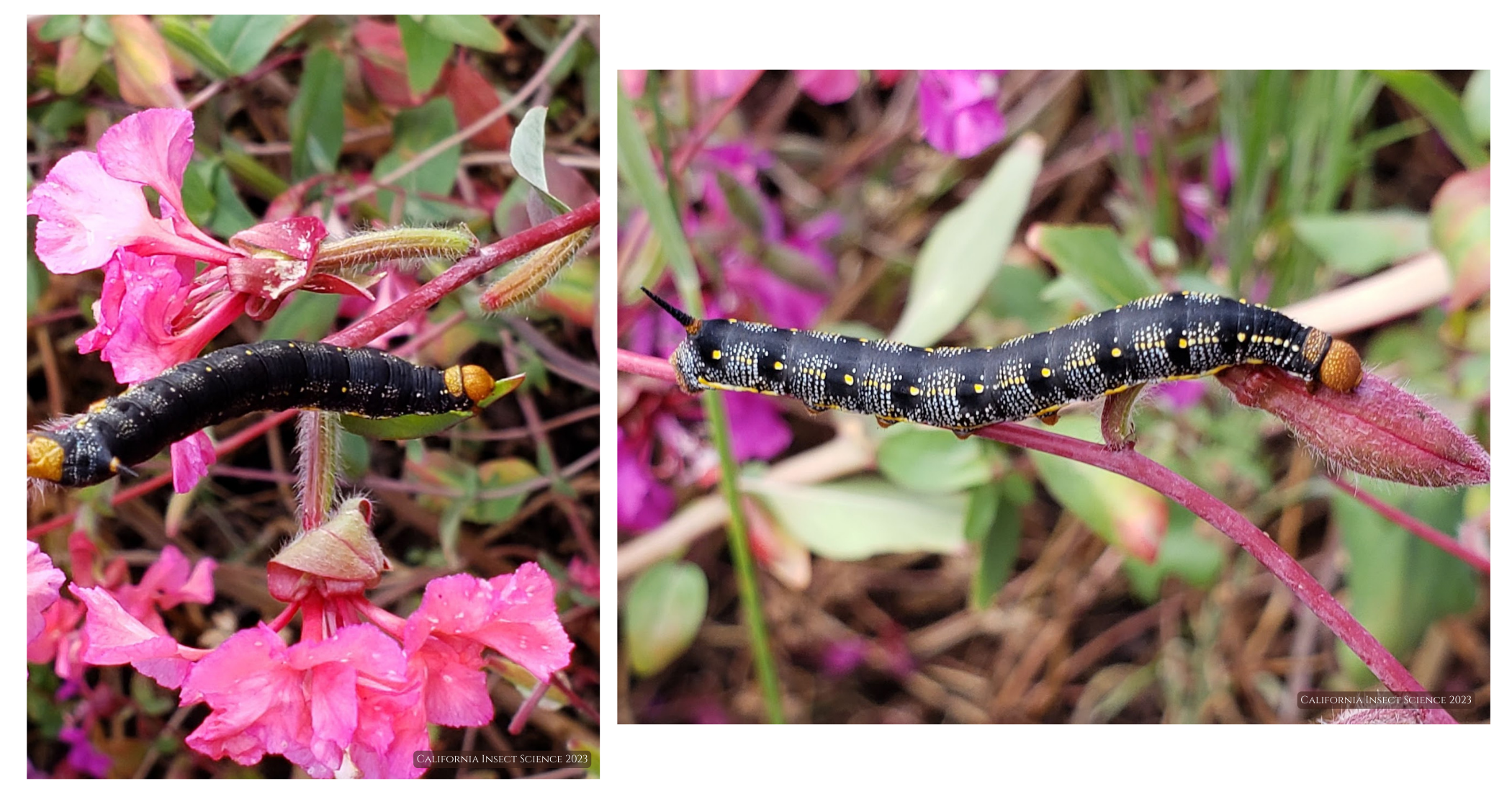
Larvae feeding on native Clarkia in May on the Central Coast, either the 2nd or 3rd generation from the originating desert populations. The caterpillar coloration can vary from black, as shown here, to light green. And the black horn on the tail indicates it’s in the sphinx moth or hornworm family, just like the tomato hornworm.
The Impacts of Warm Winters on Agriculture
California has experienced warm winters the last several years, so much so that it is throwing off the seasonal cycle timing of many insect species. Seeing white lined sphinx moths in mid to late February is one example.
The effects of warmer winters impacts agriculture as well. Many PCAs and growers feel the impacts because pest insect species are beginning their life cycles earlier in the season than ever. That means field monitoring tools, like pheromone traps, have to be deployed weeks earlier to catch the first flights that indicate a generation has begun. It also means that multi-generational species are able to add an additional generation or two in a season. For example, in the past, California red scale has had 3-4 generations per year. Now it’s more like 4 to 5 generations. If every generation adds numbers to the population, that equates to far more damage by the end of the season, thereby impacting yields.
Warmer late winter to early spring temperatures induce plants to start growing sooner than in years past. Herbivorous insects respond to environmental cues and food source availability to start their life cycles early as well. Successful growers, in turn, will be responsive and begin monitoring earlier and revise their pest management strategy accordingly.
Take home message is this:
Start monitoring your plants as soon as the rains stops. On the Central Coast of California, that means now. Have aphids appeared yet? What’s blooming? Take notes. If you have notes from last year, make note of the similarities and differences in the insects you find and their host plants. Being prepared means staying one step ahead and understanding the implications of something as harmless as seeing white lined sphinx moths in February.